The Seasoning Company Inside the AI Revolution
Ajinomoto built its name on umami. More than a century later, one of its most important products is a film thinner than a human hair, hidden beneath the world’s most powerful processors.
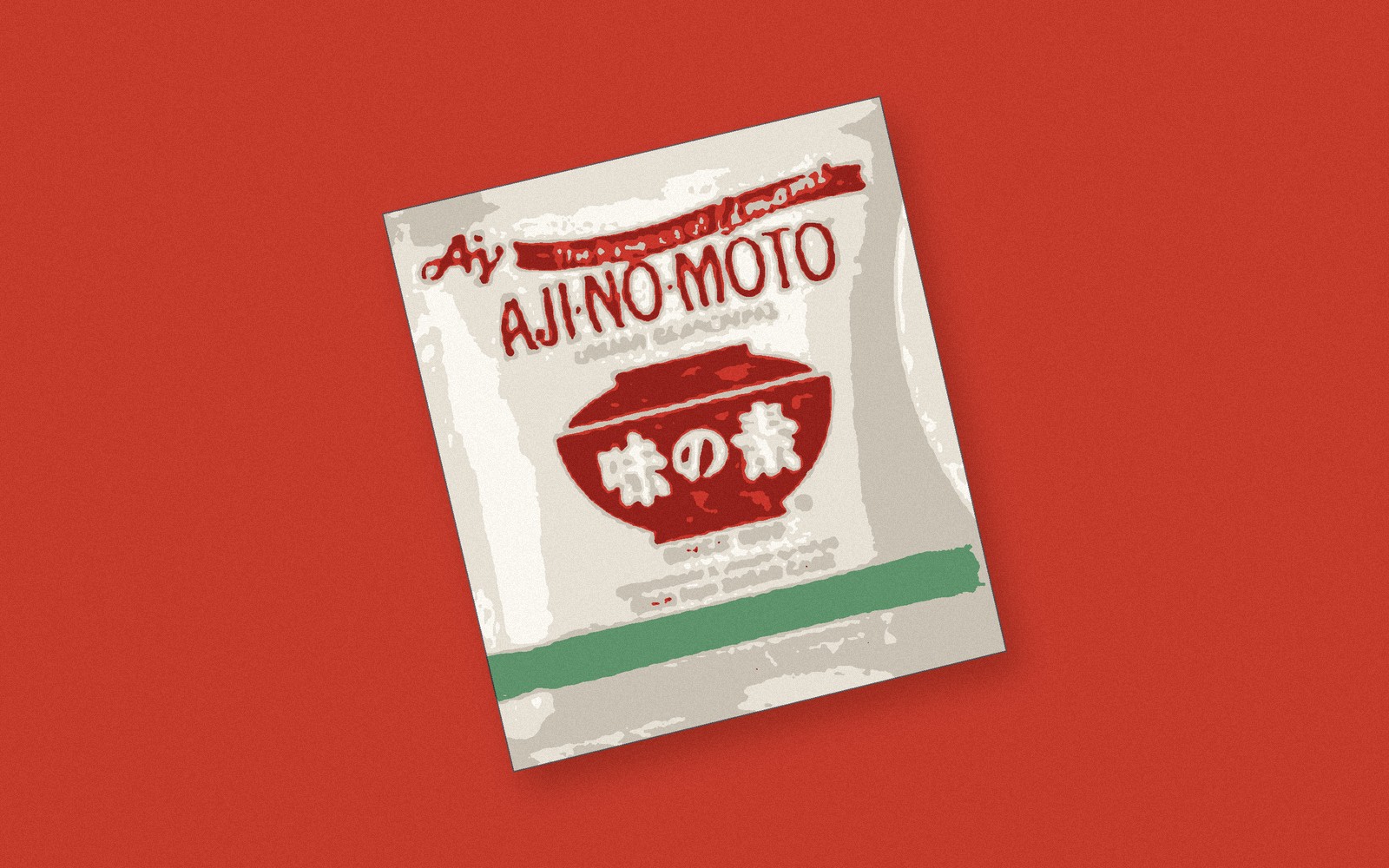
There is a good chance you have encountered Ajinomoto before.
Perhaps as a small red-and-white bottle in a kitchen cupboard. Perhaps on the label of a seasoning packet. Perhaps simply through the three letters that made the company famous: MSG.
There is also a good chance you have encountered Ajinomoto somewhere much less obvious.
Inside a laptop. Beneath a server processor. In the infrastructure behind a cloud service. Increasingly, somewhere inside the vast computational machinery being assembled for artificial intelligence.
Because one of the most important materials Ajinomoto makes today cannot be tasted at all.
It is a translucent insulating film roughly 10 micrometres thick per layer, around one-eighth the diameter of a human hair, called Ajinomoto Build-up Film, or ABF. It sits inside the sophisticated substrates used to connect high-performance processors to the rest of a computer. Ajinomoto says the material has roughly 95% of its global market, a figure also cited by Reuters in 2026. In practical terms, almost every high-performance computer and server depends on some version of it.
Which raises a fairly reasonable question.
Why is a Japanese seasoning company involved in semiconductors at all?
The answer is one of the strangest, and most instructive, innovation stories in modern industry.
It begins with soup
More than a century before generative AI, high-performance computing or advanced semiconductor packaging existed, a Japanese chemist became obsessed with a bowl of broth.
In 1908, Kikunae Ikeda, a professor at Tokyo Imperial University, was studying the distinctive savoury flavour of kombu dashi, a broth made from kelp. He became convinced that the taste was fundamentally different from sweet, sour, salty and bitter.
He eventually isolated the substance responsible: glutamate, an amino acid.
Ikeda called the sensation umami.
He patented a method for producing a seasoning based on it, and businessman Saburosuke Suzuki II helped commercialise the discovery. In 1909, AJI-NO-MOTO® went on sale in Japan, creating what the company describes as the world’s first commercial umami seasoning.
Ajinomoto had essentially begun life as a science startup.
That detail matters.
Because the company that emerged from Ikeda’s discovery was never built solely around packaged food. Beneath the consumer brand sat something much more valuable: an accumulating understanding of amino acids, fermentation, chemistry and materials.
Over decades, Ajinomoto became very good at manipulating molecules.
And eventually, that expertise escaped the kitchen.
The accident hiding inside the factory
During the 1970s, Ajinomoto researchers began studying possible uses for substances associated with the production of its umami seasoning.
Some displayed useful material properties. Researchers began experimenting with applications in epoxy resins and coatings for electronics.
It was not an obvious business.
There was no grand corporate announcement that Ajinomoto would become part of the semiconductor industry. There was no pivot deck declaring that the company was abandoning food for technology.
Instead, knowledge accumulated quietly.
By the 1990s, the computing industry had a problem.
Processors were becoming faster and more complicated. The number of connections required between a CPU and the rest of a computer was exploding, and the substrates beneath those processors needed increasingly intricate electrical wiring.
Those wires had to be separated by insulation.
At the time, manufacturers commonly used liquid, ink-like insulating materials. But coating and drying liquids was cumbersome. The process could attract impurities, slow manufacturing and create unwanted by-products. Ajinomoto had spent years studying resins and coatings. A film, it realised, might be better.
Then, in 1996, a CPU manufacturer approached the company about developing a film-type insulator.
A strange collection of capabilities suddenly aligned.
Food chemistry.
Amino-acid science.
Resins.
Electronics.
And a semiconductor industry that needed something none of those fields, individually, had quite produced.
The film
The project was led by a young Ajinomoto researcher named Shigeo Nakamura.
The challenge sounds deceptively simple: create a thin material that separates microscopic electrical circuits.
In reality, the film had to satisfy an extraordinary set of conditions simultaneously.
It needed to insulate electricity reliably. It needed to withstand heat. It could not expand too much as temperatures changed. It had to survive semiconductor manufacturing. Its surface had to work with microscopic laser drilling. Copper needed to be deposited onto it so another layer of circuitry could be created. And all of this had to happen repeatedly, layer after layer, without destroying the precision of the structure.
Ajinomoto’s solution combined organic epoxy resins, hardeners and inorganic microparticle fillers into a thermosetting film. One of the central technical difficulties was persuading materials that naturally resist mixing to remain uniformly distributed.
The result was ABF.
The early development was anything but glamorous.
Nakamura later recalled selecting a resin that required deep refrigeration and spending weekends repeatedly testing lamination equipment because there was not yet a suitable machine available for the process. Ajinomoto says the team reached the breakthrough formulation in only a few months, although turning it into an industrial product took longer.
In 1999, a major semiconductor manufacturer adopted ABF.
And then something remarkable happened.
It stayed.
The microscopic translator
To understand why ABF became so important, imagine trying to connect an entire city built at one scale to another built at a completely different one.
Modern processors contain extraordinarily small circuitry. But those processors ultimately have to connect to much larger components on a printed circuit board.
Something needs to translate between the two scales.
That something is the package substrate underneath the processor.
The substrate contains layer upon layer of extremely fine copper wiring. ABF sits between those layers, electrically insulating them while allowing manufacturers to use lasers to create tiny openings and then plate new copper connections through the structure.
Ajinomoto describes it as helping connect nanometre-scale processor circuitry to millimetre-scale terminals on the larger board.
You almost never see it.
You probably never hear about it.
Yet without materials performing this job, the spectacular processor placed above them becomes far less useful.
Silicon gets the headlines.
The substrate quietly makes the silicon usable.
And Ajinomoto quietly makes one of the substrate’s essential ingredients.
95%
There are technology companies that spend billions trying to dominate a category.
Ajinomoto appears to have accidentally built something close to that position from a research programme that once sat outside its core business.
The company reports a 95%+ global share for ABF in its field. Its 2026 material describes that level as having been maintained since the product’s launch. Earlier Ajinomoto reporting similarly showed ABF at 95% or higher.
That dominance is particularly striking because ABF is not a flashy consumer technology.
It is an enabling material.
Ajinomoto does not need its logo on the laptop.
It does not need consumers to know its name.
It needs engineers designing the next generation of advanced processors to keep needing the particular combination of electrical, thermal and manufacturing characteristics its material provides.
This is a very different kind of power.
And it is one of the recurring patterns of the quiet giant: the most strategically important company in a system is not necessarily the one closest to the customer.
Sometimes it is the company buried several layers deeper.
Literally.
Then AI arrived
For decades, ABF’s natural habitat was high-performance CPUs in personal computers and servers.
Artificial intelligence has made the story far more interesting.
The chips powering modern AI systems are becoming physically larger and architecturally more complicated. Rather than simply placing one processor on a substrate, advanced packages increasingly combine multiple pieces of silicon, memory and other components.
More components mean more connections.
More connections mean more wiring.
More wiring means larger substrates and more insulating layers.
Which means more ABF.
Ajinomoto’s own 2025 integrated report illustrates just how dramatic the shift could become. Its reference design for a conventional semiconductor package used a board-area index of 1 and six ABF layers. Its illustration of an AI semiconductor package through 2030 uses a substrate around 3.5 times the area and 18 ABF layers.
Put the two effects together and Ajinomoto estimates an advanced AI package can consume around ten times as much ABF.
That is an extraordinary dynamic.
Ajinomoto does not merely benefit if the world produces more processors.
It can benefit as each processor becomes more demanding.
The race to make AI chips more powerful therefore increases the importance of a material invented decades before ChatGPT, generative AI or the modern GPU boom existed.
A technology developed in the 1990s has found itself sitting underneath one of the defining technological races of the 2020s.
The most interesting part isn’t the monopoly
It would be easy to make the Ajinomoto story simply about market share.
But the more interesting lesson is about corporate identity.
Companies are usually described by what they sell.
Nike sells sportswear. Toyota sells cars. Netflix sells entertainment. Ajinomoto sells food.
Except that description can become a trap.
Because what a company sells today and what a company actually knows how to do are not necessarily the same thing.
Ajinomoto’s deepest capability was never simply putting seasoning into packets.
It was understanding amino acids, fermentation and chemistry at an unusually sophisticated level, and then building decades of adjacent scientific knowledge around them.
Once you look at the company that way, semiconductors stop seeming quite so bizarre.
ABF is not Ajinomoto abandoning its expertise.
It is Ajinomoto reinterpreting what its expertise can be used for.
That difference is enormous.
The anti-pivot
Startup culture has made the word pivot almost synonymous with innovation.
When circumstances change, change the product. Change the market. Change the business model. Move fast.
Ajinomoto offers another model.
It spent decades accumulating a capability before an enormous market appeared for one of its unexpected applications.
The company did not throw away its past.
It went deeper into it.
The same scientific heritage that started with glutamate eventually led into pharmaceuticals, cell-culture media, specialty chemicals and electronic materials. Ajinomoto now frames much of this portfolio under what it calls “AminoScience” rather than defining itself simply as a food company.
There is something almost unfashionable about the strategy.
Keep researching.
Keep the strange project alive.
Develop expertise that may not have an immediate blockbuster market.
Wait.
Then, when technology elsewhere changes, suddenly a capability that seemed peripheral becomes essential.
ABF is what happens when corporate patience meets technological timing.
And then the scientist became CEO
There is one final twist.
Remember Shigeo Nakamura, the young researcher leading ABF development in the 1990s?
He stayed at Ajinomoto.
He ran laboratories. He became president of Ajinomoto Fine-Techno. He earned an MBA. He moved into broader management roles and later ran Ajinomoto’s Latin American operations.
Along the way, he became the company’s most prolific inventor by its own internal measure, with Ajinomoto attributing 512 patents to him based on invention-contribution calculations through fiscal 2024.
Then, in February 2025, nearly three decades after beginning work on ABF, Nakamura became President and CEO of Ajinomoto: the company’s first CEO with a technical background.
The researcher behind the strange semiconductor experiment eventually ended up running the 117-year-old corporation.
It is difficult to invent a neater ending.
Except this is not the ending.
Beyond electrons
Ajinomoto is now trying to repeat the trick.
As AI systems grow, one of the industry’s largest emerging problems is not simply computing power but energy consumption and data movement.
Traditional electronic connections become increasingly expensive in power as enormous quantities of information move between processors.
One possible future involves bringing optical communication (moving information with light) much closer to the chips themselves.
Ajinomoto is already researching materials for this next generation of photonic-electronic co-packaging, alongside magnetic materials, sealing materials and an ABF-related resin-coated copper foil. The company’s stated ambition is to expand outward from ABF rather than treat it as a finished story.
It is the same strategy again.
Do not attempt to predict exactly which device will win.
Position yourself underneath the technological transition.
Make something the winners will need.
The world is beginning to notice
For years, the semiconductor story belonged to names such as Intel, TSMC, NVIDIA and ASML.
Ajinomoto hardly looked like part of that universe.
That anonymity is beginning to disappear.
In 2026, British investment firm Palliser Capital took a stake in Ajinomoto and publicly focused attention on the value of its semiconductor-materials operation. Reuters Breakingviews highlighted the strange reality: a company famous for MSG had become a critical, highly concentrated supplier adjacent to the AI boom.
The quiet giant is becoming slightly less quiet.
Yet the fundamental asymmetry remains.
Billions of people will interact with AI without ever hearing the name ABF.
Companies will spend extraordinary sums designing processors.
Data centres will rise across the world.
Models will become larger.
GPUs will become faster.
And buried beneath some of that computing power will be layer after microscopic layer of insulating material made by a company that began with a Japanese scientist wondering why seaweed broth tasted so good.
The real secret ingredient
Ajinomoto’s story is tempting because of the contrast.
Seasoning and semiconductors.
Soup and servers.
Umami and AI.
But reducing it to an amusing corporate coincidence misses the point.
ABF did not come from nowhere.
It emerged from knowledge accumulated for decades, from researchers being allowed to investigate applications outside the company’s obvious category, from a willingness to keep developing a business that was once considered non-core, and from understanding that a company’s most valuable asset may not be the product consumers associate with its name.
Fujifilm survived the disappearance of photographic film by understanding that the chemistry hidden inside photography could be useful elsewhere.
Ajinomoto’s story is different, but the principle rhymes.
The product is temporary. The capability can endure.
Today Ajinomoto employs almost 35,000 people, operates across dozens of countries and runs businesses spanning food, healthcare, biopharma and advanced materials.
Yet perhaps the best representation of the entire company is still that nearly invisible film.
Something developed out of knowledge accumulated for one industry, transformed for another, hidden from consumers, difficult to replace, and sitting exactly where the next technological revolution needs it.
More than a century ago, Ajinomoto discovered an ingredient that changed how the world thought about taste.
Now one of its most remarkable ingredients has no taste at all.
You cannot see it.
You cannot eat it.
But the AI boom may have a little Ajinomoto inside.