Anduril Wants to Turn War Into a Software Problem
Palmer Luckey already changed computing once with Oculus. Now his second company is worth $61 billion, building autonomous fighter jets, submarines, missiles and an AI operating system, while trying to rewrite the economics of the defence industry itself.
There is a strange moment in the history of a technology when it stops feeling like science fiction and starts becoming infrastructure. For artificial intelligence, that moment is happening in offices, hospitals and software companies. For Anduril, it is happening somewhere far more consequential: the battlefield.
The California company builds autonomous aircraft, underwater vehicles, surveillance systems, counter-drone weapons, missiles and the software that connects them. Its catalogue now stretches from small Ghost drones to FQ-44 autonomous fighter aircraft, from AI-enabled surveillance towers to enormous unmanned submarines. But looking at the hardware alone misses the most interesting part of the company. Anduril’s real ambition is to become the operating system and production engine of 21st-century warfare.
That ambition has become extremely valuable. In May 2026, Anduril raised $5 billion at a $61 billion valuation, more than doubling its valuation in less than a year. Revenue had doubled during 2025 to approximately $2.2 billion. Reports based on figures shown to prospective investors suggested it was targeting roughly $4.3 billion in 2026 revenue, although those same projections showed an approximately $1.2 billion operating loss as the company pours money into factories, aircraft and new weapons programmes.
Anduril is therefore not simply another defence startup benefiting from a fashionable sector. It is attempting something much more unusual: to take the product philosophy of Silicon Valley (build first, iterate quickly, own the software, manufacture at scale and accept the risk yourself) and insert it into an industry traditionally dominated by billion-dollar government programmes designed over decades.
If it works, Anduril may become one of the first genuinely new American defence giants in generations. And if it fails, the reasons will reveal just how difficult it is to treat warfare like technology.
It starts with the man who built Oculus
Palmer Luckey was already rich before Anduril existed. As a teenager obsessed with virtual reality, Luckey began experimenting with VR headsets in his parents’ garage. That eventually became Oculus VR, the company behind the Oculus Rift. Facebook bought Oculus in 2014 for roughly $2 billion, turning Luckey into one of Silicon Valley’s youngest technology fortunes. A few years later, following political controversy and his departure from Facebook, he began working on an entirely different problem.
The problem was not virtual reality. It was the Pentagon. Luckey joined forces in 2017 with Brian Schimpf, Matt Grimm and Trae Stephens, all with connections to Palantir, and Joe Chen, an early Oculus engineer. Stephens was also a partner at Founders Fund, Peter Thiel’s venture-capital firm, which became one of Anduril’s earliest backers.
Even the name announced the founders’ ambitions. Andúril is the reforged sword wielded by Aragorn in The Lord of the Rings. Luckey reportedly keeps a replica of the sword, and the company adopted a visual identity that looks more like a futuristic software startup than a traditional military contractor. But the founders had spotted something far more important than branding.
At the time, Silicon Valley and Washington had an uneasy relationship. Some large technology companies faced employee opposition to military contracts; traditional defence procurement, meanwhile, was dominated by companies such as Lockheed Martin, Northrop Grumman, Boeing, RTX and General Dynamics. Defence technology existed in a parallel universe from consumer technology: enormous budgets, extremely long development cycles, complex contracting procedures and products often designed in response to detailed government specifications.
Anduril’s founders thought the system had the incentives backwards. Why should the government pay a company to spend years figuring out how to build something? Why shouldn’t defence companies operate more like Apple, Tesla or SpaceX, investing their own money, building a product they believe should exist, and then convincing the customer to buy it?
That question became Anduril’s entire business model.
Build first. Sell later.
Traditional defence procurement frequently begins with the government defining what it wants. Contractors compete for development work, specifications multiply, years pass, costs change and the state remains deeply involved throughout the process. Anduril argues that this structure can reward complexity rather than speed.
Its alternative sounds almost mundane because it is how most normal industries already work. Use private capital to fund R&D. Design a product yourself. Build it. Demonstrate that it works. Then sell the finished capability to the government.
The company’s own mission document explicitly argues that defence firms should privately finance R&D and build products “off the shelf,” rather than waiting for governments to dictate detailed technical specifications. Its preferred philosophy is “build to mission, not to spec.”
The financial incentive changes as well. If Anduril agrees to provide something for a fixed price and figures out how to make it more efficiently, Anduril benefits from the savings. If development becomes more expensive than expected, Anduril can bear more of that risk. Company executives argue that this aligns incentives around making products faster and cheaper rather than maximising the amount of reimbursable engineering work.
It sounds like a technical distinction in contracting. It isn’t. It shifts the company from contractor to product company. And that distinction explains almost everything Anduril does.
Lattice might be more important than the drones
Look at an Anduril promotional image and you will probably see something spectacular: a sleek drone, autonomous submarine or aircraft. But the company’s most strategically important product may be invisible. It is called Lattice.
Lattice is Anduril’s software platform for connecting sensors, vehicles, weapons and human operators. Instead of every radar, aircraft, camera, drone and command centre operating as a separate technological island, Lattice is designed to ingest information from different systems and create a shared understanding of what is happening. It can integrate both Anduril hardware and equipment produced by other companies or governments.
Think of it less as one weapon and more as the nervous system between weapons. A sensor might detect an aircraft. Another sensor identifies it. Software combines those observations into a track. An operator sees the information and can coordinate an appropriate response. Autonomous systems can also be tasked and coordinated through the same architecture.
This is the part of Anduril that begins to resemble a platform business. Apple becomes more powerful when more devices and developers sit inside its ecosystem. Amazon Web Services becomes more valuable as more applications depend on its infrastructure. Anduril wants something conceptually similar in defence: different machines, manufacturers and sensors connected through a common software layer.
The potential strategic advantage is enormous. If Lattice becomes deeply embedded in military command systems, the relationship with Anduril no longer depends on whether the Pentagon buys one specific drone. The software can sit across an expanding collection of equipment. That thesis received a major validation yesterday.
On 5 October 2026, Anduril announced that the U.S. Army had awarded it a contract worth up to $1.8 billion over five years to expand its Next-Generation Command and Control programme from experimentation toward operational fielding, starting with I Corps. The programme is effectively a real-world demonstration of Anduril’s original thesis: software connecting sensors, vehicles, weapons and operators regardless of who manufactured them.
In July, Lattice also won its first NATO contract, becoming part of NATO’s Enhanced Air Command and Control Data Platform initiative, an especially interesting development because the system must work across the technology and security environments of 32 separate member countries. The bigger Anduril becomes, the clearer it becomes that the company is not only trying to sell the military machines. It wants to provide the intelligence layer through which those machines understand one another.
The Tesla theory of weapons manufacturing
Software alone, however, is not enough. If modern wars consume enormous quantities of drones, missiles and autonomous vehicles, somebody still has to manufacture them. Anduril believes the existing defence industrial base is poorly configured for this.
Traditional Western militaries spent decades investing in what defence strategists sometimes call “exquisite” systems: highly sophisticated aircraft, ships and missiles that may offer extraordinary capability but are enormously expensive and slow to replace. Anduril’s argument is that a future conflict (particularly one involving a major industrial power) could require something else as well: large numbers of cheaper autonomous systems that can be manufactured quickly and lost without losing a human pilot.
The war in Ukraine has made the logic much easier to understand. Small drones costing a fraction of traditional weapons have become central to reconnaissance and attack, while electronic warfare can make technologies obsolete frighteningly quickly. In 2025, 96% of the roughly one million drones deployed by Ukraine were Ukrainian-made, according to figures cited by Reuters, an illustration of just how important local iteration and scale have become.
Anduril’s response is something called Arsenal. In Ohio, the company is constructing Arsenal-1, a manufacturing campus that could eventually reach five million square feet. Anduril says it is investing nearly $1 billion of its own money, expects to create more than 4,000 direct jobs and intends the facility ultimately to manufacture tens of thousands of military systems annually.
The philosophy is closer to automotive manufacturing than traditional defence production. An underlying software system called Arsenal OS is intended to connect design, supply chains and manufacturing so that factories can switch production between different systems as military needs change. That flexibility matters. Imagine a traditional factory designed around producing one aircraft for thirty years. Now compare it with a factory designed to produce autonomous aircraft, missiles and drones whose software and components may change constantly.
Anduril is betting that the factory itself can become a technology platform. That might be the least glamorous and most important part of the company’s strategy.
A fighter jet with nobody inside it
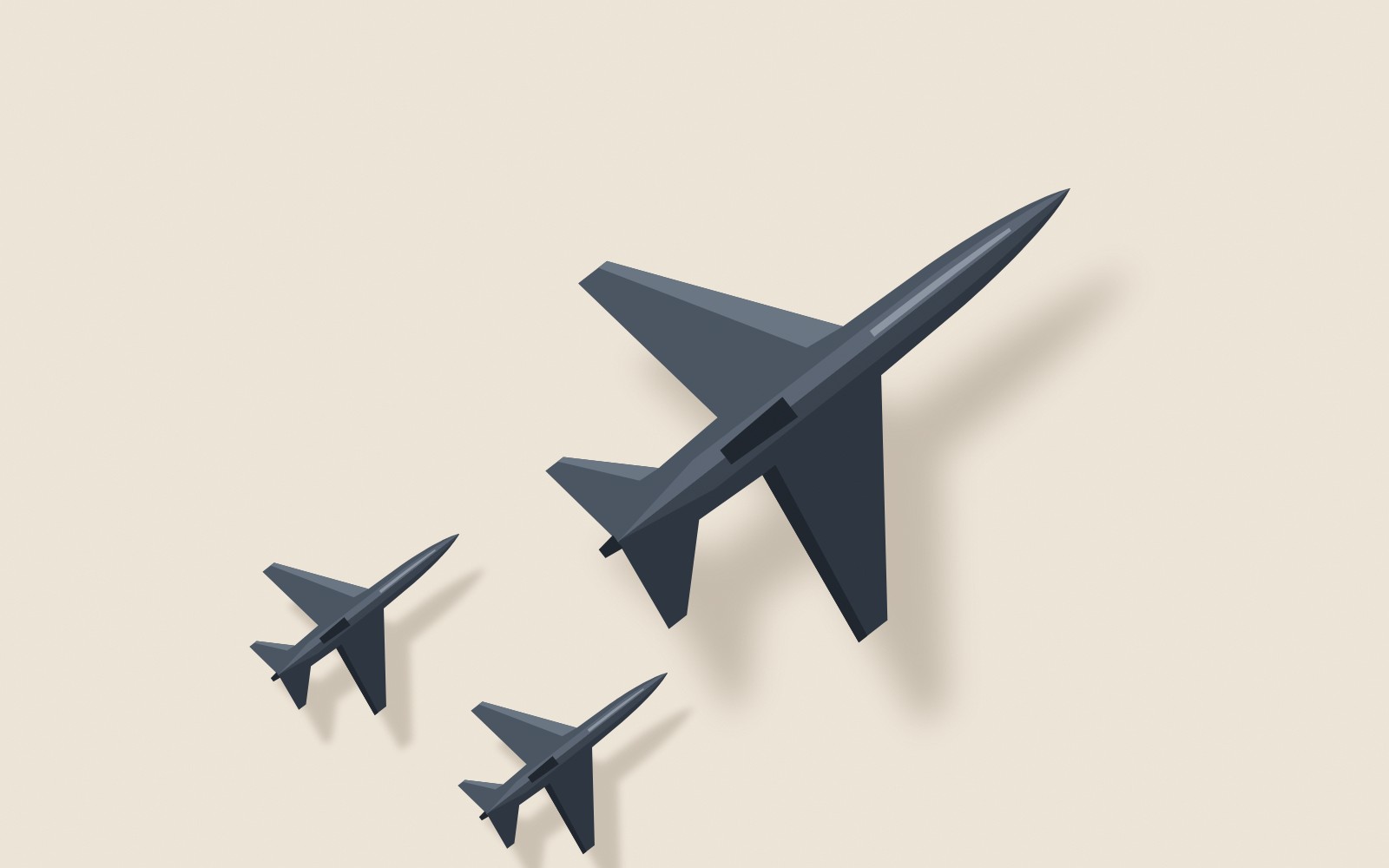
Nothing illustrates how far Anduril has travelled from its startup origins better than Fury. Fury began with Blue Force Technologies, an aircraft company Anduril acquired in 2023. The aircraft was subsequently entered into the U.S. Air Force’s Collaborative Combat Aircraft programme, or CCA. The concept sounds like something from a video game.
Instead of every combat aircraft requiring its own pilot, autonomous aircraft could operate alongside crewed fighters such as the F-35 and future F-47. These aircraft could extend sensors, carry weapons and take on missions where sending a human pilot would create unnecessary risk. In June 2026, that idea crossed an extraordinary threshold. The Air Force selected Anduril’s FQ-44 and General Atomics’ FQ-42 for production. The programme intends to procure more than 150 Collaborative Combat Aircraft by the end of the decade and ultimately envisions roughly 1,000 aircraft.
For Anduril, this is strategically enormous. A company founded in 2017 is now producing aircraft for one of the U.S. Air Force’s central future combat programmes. Nine years is approximately the amount of time some traditional defence programmes can spend moving from one development milestone to another. Anduril went from startup to fighter-aircraft manufacturer in roughly the same period.
The Air Force is also separating competition for the aircraft from competition for the autonomous software controlling them. Anduril is competing there too, through Lattice. This reveals the company’s ideal position: sell the vehicle, compete to provide its autonomy, connect it to Lattice, then manufacture it through Arsenal. Hardware creates revenue. Software creates integration. Manufacturing creates scale.
Together, they create the moat.
Anduril is expanding in every direction at once
A few years ago, it would have been reasonable to describe Anduril as a drone company. That description is now almost meaningless.
Its air portfolio includes Ghost reconnaissance drones, Altius systems, Bolt, Barracuda and Fury. On land, Anduril sells Sentry surveillance systems, Pulsar electronic-warfare technology, counter-drone systems and tactical infrastructure. At sea, it has autonomous underwater vehicles including Dive and Copperhead. Lattice sits across the portfolio.
Australia has become one of the most important demonstrations of its maritime strategy. Anduril’s Ghost Shark autonomous undersea programme became a A$1.7 billion programme of record, and the company opened a dedicated Sydney factory in 2025.
Its Barracuda programme illustrates the “affordable mass” concept even more directly. In May 2026, the U.S. government signed a framework agreement covering a minimum 3,000 surface-launched Barracuda-500M systems over three years, with the ability to procure more. There is also space. In May, Anduril announced that it was leading an industry team working on space-based interceptors connected to the American Golden Dome missile-defence initiative.
And there is augmented reality. Anduril won a $159 million U.S. Army prototyping contract in 2025 for Soldier Borne Mission Command, combining night vision, augmented reality and battlefield information in a helmet-mounted system. Partners include Meta and Qualcomm, bringing Luckey in an almost surreal circle back toward the virtual-reality world he helped create at Oculus.
The same person who once wanted you to put on a headset and enter a virtual world is now building technology designed to put digital information directly over the real battlefield.
Its acquisition strategy is quietly building a vertical empire
Another underappreciated part of Anduril’s growth is M&A. Rather than developing every technological capability internally, the company has repeatedly purchased specialists and absorbed their technology into a larger system.
Area-I brought the Altius drone family. Dive Technologies expanded underwater autonomy. Adranos added solid rocket motors. Blue Force Technologies became the foundation for Fury. Numerica added radar and command-and-control capabilities. Other acquisitions have expanded rugged computing and infrared sensing. And four days ago, on 2 October 2026, Anduril bought another surprisingly niche technology company: Massachusetts-based Popoto Modem.
Why buy a modem company? Because radio waves perform poorly underwater. Autonomous submarines therefore need acoustic communications, and traditional underwater communications equipment can be expensive enough to make large fleets difficult to coordinate. Popoto develops acoustic modems capable of creating multi-node underwater networks. Anduril plans to integrate them particularly into its Copperhead autonomous underwater vehicles so that one operator can eventually supervise large numbers of systems.
It sounds obscure. Strategically, it is exactly what Anduril has been doing for years. Find the technological bottleneck that prevents autonomous systems from scaling, buy or build the missing capability, then integrate it into Lattice. The acquisition is not really about modems. It is about owning more of the stack.
The $61 billion bet
Investors clearly believe this structure is valuable. Anduril was valued at roughly $30.5 billion after a $2.5 billion financing in 2025. Less than a year later, Thrive Capital and Andreessen Horowitz led the $5 billion round that valued it at $61 billion. Those numbers look less insane when placed inside the market Anduril is attacking.
Global military expenditure reached approximately $2.887 trillion in 2025, according to SIPRI, the eleventh consecutive annual increase. European military expenditure alone rose 14% to $864 billion, while total NATO spending represented more than half of worldwide expenditure. The defence market is enormous. But Anduril’s opportunity is not simply “governments are spending more.” It is where they are spending.
Drones, autonomy, counter-drone technology, missile defence, electronic warfare, software-defined command systems and scalable weapons manufacturing are moving toward the centre of Western defence planning. Those are precisely the categories Anduril spent the last decade positioning itself around. That creates one of the most powerful phenomena in business: a company whose original thesis suddenly finds the market moving toward it.
Ukraine accelerated the importance of drones. Concern about China accelerated the focus on Pacific autonomy. Missile and drone attacks increased demand for air defence. Supply-chain pressure highlighted manufacturing shortages. AI made autonomous systems more credible. Rising military budgets provided capital. And Anduril happened to be sitting at the intersection of all six.
But the economics are still not Silicon Valley economics
There is an important reality hidden underneath the enormous valuation. Weapons are expensive to build. A software company can sell another subscription to a customer at almost no marginal manufacturing cost. Anduril cannot produce another fighter aircraft, missile or submarine for free. It must buy materials, build factories, manage suppliers, maintain inventory and employ manufacturing workers. Arsenal-1 alone represents nearly a billion dollars of investment.
That helps explain the paradox in Anduril’s finances. Revenue is growing extraordinarily quickly, yet reports based on information shown to investors indicate the company expects substantial operating losses while it scales. Anduril is trying to achieve software-company speed in an industry that stubbornly obeys the laws of physics. That may become one of its biggest strategic challenges.
Moving fast with code is cheap. Moving fast with jet engines is not.
“We do fail” is not always comforting when the product is a weapon
Anduril’s culture prizes iteration. Build. Test. Fail. Improve. Repeat. That logic is normal in Silicon Valley. A beta app crashes, engineers fix it and release another update. Defence creates a much harder version of that philosophy.
Reuters reported in late 2025 that two Altius drones crashed during U.S. Air Force testing, while earlier versions of Anduril’s Ghost drone struggled against Russian electronic warfare in Ukraine. Anduril described the incidents as isolated examples and argued that failures during aggressive testing are an unavoidable part of learning and development. The company said Altius had accumulated more than 2,000 hours of testing, demonstrations and deployment, while later Ghost versions were modified based on operational lessons.
There is logic to Anduril’s argument. A company that refuses to test systems until they break might learn less about them. But the stakes are different when the system can carry weapons. “Move fast and break things” sounds considerably less charming when the thing being tested is an autonomous military aircraft. This creates an unavoidable tension between Silicon Valley’s culture of rapid experimentation and the military requirement for reliability.
Anduril will ultimately be judged not by how quickly prototypes appear on YouTube or at trade shows, but by whether its systems survive jamming, bad weather, damaged communications and adversaries actively trying to confuse or destroy them. War is an exceptionally hostile product-testing environment.
Then there is the ethical question nobody can code away
The most controversial part of Anduril is not the valuation. It is what the products are designed to do. Artificial intelligence can identify objects, connect sensor data, navigate autonomous systems and assist operators. As autonomy improves, the question becomes uncomfortable very quickly: how much decision-making should machines have when lethal force is involved?
Campaigners and researchers have called for strong limits on autonomous weapons, warning that algorithmic systems could weaken meaningful human control over life-and-death decisions. Anduril and Luckey have generally taken a much more permissive view of military autonomy, arguing that autonomous weapons are an inevitable and necessary part of future warfare. There are equally serious questions surrounding surveillance.
Anduril’s first major product push involved AI-powered surveillance towers used around the U.S.-Mexico border. Privacy groups have criticized the technology because large-scale automated surveillance systems can monitor areas where ordinary civilians live and move, raising questions about who is observed, what information is retained and how it is used. This is where Anduril differs fundamentally from the other companies Novum usually covers.
If Spotify makes a bad recommendation, you skip a song. If an AI defence system makes a bad recommendation, the consequences can be irreversible. For Anduril, responsible product design is therefore not simply good governance. It is part of the product itself.
Palmer Luckey is becoming part entrepreneur, part defence strategist
Luckey’s role has also evolved. Brian Schimpf runs Anduril as CEO, while Luckey remains its highly visible founder and public evangelist. He talks less like a conventional executive and more like someone attempting to shape how the United States thinks about future conflict. That influence has now moved beyond Anduril.
At the end of September 2026, the U.S. defence establishment announced Project Meridian, a study of future warfare co-led by Palmer Luckey, Elon Musk and former U.S. House Speaker Newt Gingrich. The group has been tasked with examining how emerging technologies could change military strategy. There is an obvious conflict-of-interest question when leaders of companies holding major government contracts help advise government thinking about future military technology. That does not invalidate their expertise, but it makes transparency increasingly important.
And Luckey has never attempted to appear politically neutral. His outspoken political activity has followed him since his Facebook years and remains part of the broader debate around Anduril’s rise. At the same time, the company has won major contracts across different U.S. administrations, suggesting the institutional demand for its technology has become broader than the politics of one founder.
The distinction is important. Palmer Luckey may be the company’s mythology. Brian Schimpf and thousands of engineers, manufacturing workers and programme managers have to turn that mythology into an industrial business.
The latest contract might explain the whole strategy
Return to the $1.8 billion Army agreement announced on 5 October. On its surface, it is another large defence contract. Look more closely and it represents almost the entire Anduril thesis in one deal. The company started by arguing that software should become the connective tissue of the battlefield. It built Lattice. It connected sensors.
Then drones. Then autonomous vehicles. Then weapons. Then equipment from other manufacturers. It entered Army experimentation. And now the Army is preparing to take that system from experimentation toward operational use at dramatically larger scale. That is precisely how a platform company grows. First, provide a useful tool. Then become the layer connecting other tools.
Eventually, become difficult to remove. If Anduril succeeds, the most valuable thing it owns may not be any individual missile, drone or aircraft. It may be the architecture through which all of them communicate.
The real innovation is the business model
It is tempting to make Anduril’s story about killer drones. That is the visually dramatic part. But from a business perspective, something more interesting is happening. Anduril has combined several strategies normally found in different types of companies. It has the venture financing model of a technology startup. The recurring software ambition of a platform company.
The vertical integration of Tesla. The manufacturing ambitions of an industrial conglomerate. The acquisition strategy of a consolidator. And the customer base of a traditional defence prime. Then it links everything through one central belief: the company, not the government, should take more of the initial technological risk. That is why the $61 billion valuation matters.
Investors are not valuing Anduril merely on today’s drone sales. They are betting that it can become a new kind of prime contractor: one designed around software, autonomy and manufacturing from the beginning rather than attempting to add those technologies onto organisations created during the Cold War. The comparison to Lockheed Martin is therefore both obvious and slightly misleading.
Anduril does not want to become Lockheed Martin. It wants to make the organisational model that produced Lockheed Martin obsolete.
The next test is scale
Anduril has already proved several things. A defence startup can attract elite engineers. Venture capital can finance weapons development. A new company can win billion-dollar military programmes. An autonomous aircraft developed by a company founded in 2017 can reach U.S. Air Force production. A software platform built by a startup can become part of Army and NATO command infrastructure.
What it has not proved yet is arguably much harder. Can it manufacture at the scale of a defence giant? Can autonomous systems remain reliable in real wars? Can it maintain startup speed when it employs thousands of people and manages giant government programmes? Can it keep funding enormous R&D programmes without losing financial discipline?
Can one software architecture connect increasingly diverse fleets without becoming cumbersome itself? Can governments trust a private platform company with infrastructure this strategically important? And can democratic societies become comfortable with increasingly autonomous weapons? Those questions matter far more than the next funding round. Because Anduril is approaching the point at which it stops being an interesting defence startup and starts becoming part of the defence establishment it was built to disrupt.
From Oculus to the arsenal
There is something almost implausible about the timeline. In 2014, Palmer Luckey was selling Facebook a virtual-reality startup. In 2017, he and his co-founders created a defence company that many in Silicon Valley considered strange, controversial or both. Nine years later, that company is valued at $61 billion. It is producing an autonomous fighter aircraft for the U.S. Air Force.
Building a five-million-square-foot weapons factory. Developing thousands of missiles. Producing autonomous submarines. Providing software to NATO. Expanding into space-based missile defence. And integrating the U.S. Army’s future command-and-control architecture under a contract worth as much as $1.8 billion.
Perhaps most importantly, the market around it has changed. World military spending reached almost $2.9 trillion last year, autonomy is moving into the centre of military planning, and the Pentagon is explicitly looking for ways to buy technology faster. Anduril’s greatest strategic achievement may therefore be that the world has begun moving toward the future it designed itself around years ago.
Silicon Valley spent the past two decades digitising shopping, transport, entertainment, communication and work. Anduril is attempting to apply the same logic to national defence. The result is uncomfortable, fascinating and potentially enormous. Because the company is not really asking whether AI will become part of warfare. It has already made that assumption.
The question Anduril is betting $61 billion on is who gets to build the operating system when it does.
Research updated 6 October 2026.