Would you give your AI a credit card?
AI can already write, code and make decisions. Catena is preparing for the moment it can spend money too.
The missing piece
Imagine asking an AI to organise your holiday. It finds the cheapest flights, chooses a hotel near the centre and plans what you should do when you arrive. Then it reaches the final step: paying. That is where things get complicated. AI is moving from simply answering questions to carrying out tasks. These systems are often called AI agents: instead of just telling you what to do, they can be given a goal and work through the steps themselves. A company might ask an agent to find a new supplier. The agent could search for candidates, compare prices and negotiate an order. Eventually, it needs to pay. But the financial system was built for people and companies, not machines. Bank accounts have owners. Credit cards have limits. Large payments need approval. Giving an AI access to money also gives it the ability to lose it. Catena is building for that problem.
From digital money to AI money
Catena was founded by Sean Neville and Matt Venables, who had previously worked together at Circle, the company behind the USDC digital dollar. USDC (USD Coin) is a regulated digital stablecoin pegged 1:1 to the U.S. dollar. Neville co-founded Circle in 2013 and spent years working on ways to move money over the internet. After leaving in 2020, he turned his attention to artificial intelligence. By 2023, Neville and Venables were thinking about a new problem: if AI agents were going to act independently, how would they safely use money? Their answer became Catena, a financial platform designed specifically for AI agents. The company raised $18 million in 2025 and another $30 million in 2026. Its central idea is simpler than the technology behind it: AI should be able to use money without being given complete control over it.
Giving machines rules
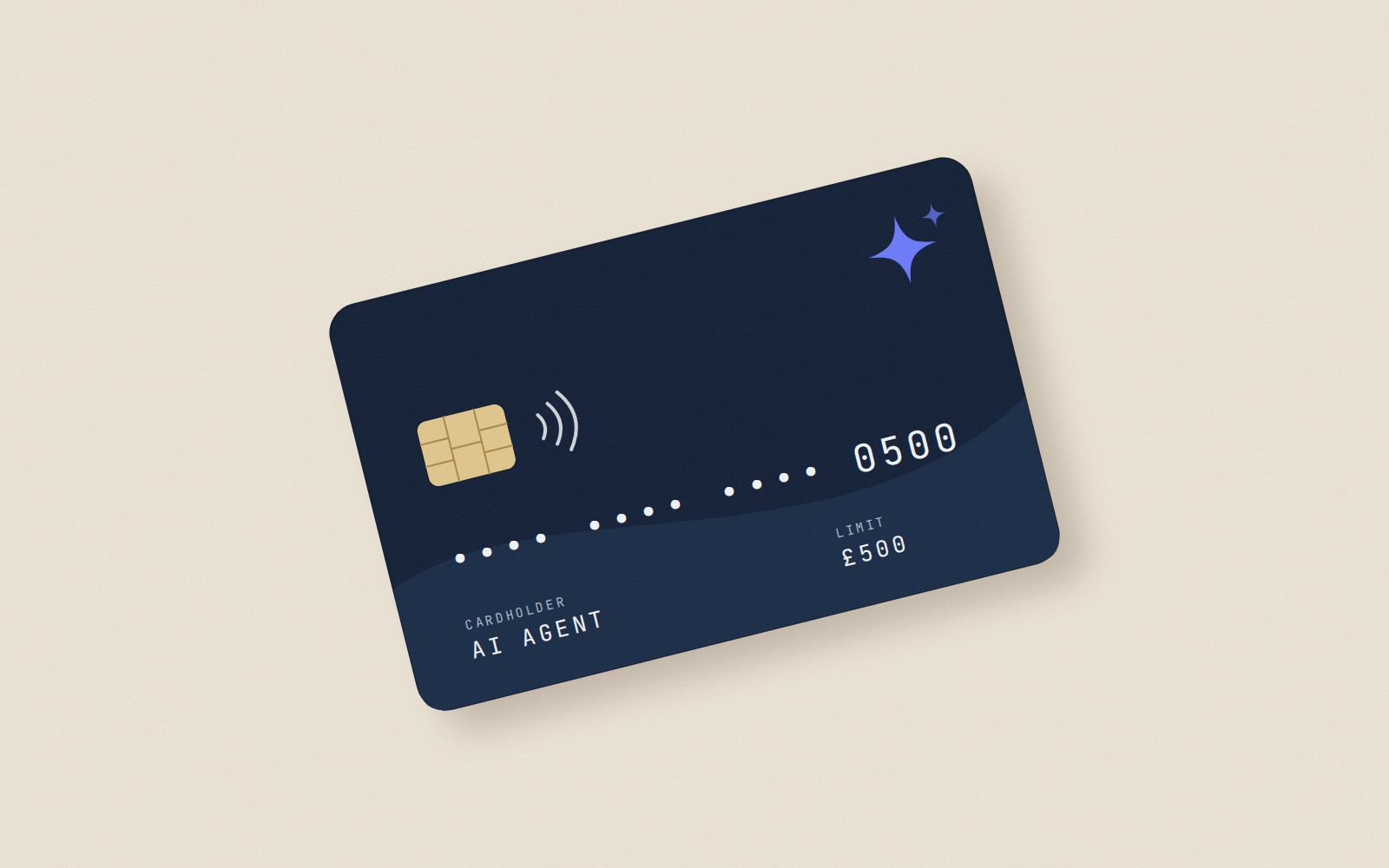
Imagine giving an AI £10,000 to buy equipment for a business. Instead of simply handing over access to the company bank account, Catena lets humans create rules around what the agent can do. It might only be allowed to buy from approved suppliers, spend £500 at a time and ask a manager before making an unusual payment. The AI can make decisions, but it cannot ignore those rules. That matters because AI is designed to be flexible. Ask the same question twice and you might get two different answers. Financial controls cannot work like that. If the spending limit is £500, a £501 payment should be rejected every time. The AI makes the decision. Catena decides whether that decision is allowed. The machine can make the choice. The human still makes the rules.
An ID card for AI
Money creates another problem: identity. Before a bank lets you move money, it wants to know who you are. But how does a financial system identify a piece of software? Catena is building verifiable identities for individual AI agents. Think of it as an employee badge for a machine. A business can know which agent requested a payment, who is responsible for it and what that agent is allowed to do. Every action can also leave a record. If an AI sends £2,000 somewhere it should not, “the computer did it” is not a useful explanation. A company needs to know which agent acted, what it tried to do and why the payment was allowed. That becomes much more important if companies eventually use hundreds or thousands of agents. Catena has even begun testing the idea on itself. In early 2026, the company said its own AI agents had started managing part of its corporate funds using the same controls it plans to offer customers.
Why build a bank?
Catena could have stopped at building software. Instead, it wants to become part of the banking system itself. The company argues that helping AI move money is not enough. If agents eventually control large amounts of money, someone needs to be responsible for how that money is held and governed. Catena is therefore pursuing a US national trust bank charter. In September 2026, it received preliminary conditional approval from the Office of the Comptroller of the Currency. It still needs final approval before the bank can begin operating. The idea is unusual: instead of adding AI to a financial system designed for humans, Catena wants to build financial infrastructure around AI from the beginning.
When machines pay machines
The bigger idea goes beyond an AI booking your holiday. Imagine an AI running part of an online business. It could buy advertising, pay for computing power, order stock or purchase information. Another AI might be selling those services. The buyer could be software. The seller could be software. Money could move between them without a person clicking “pay” each time. Catena is betting that this machine-to-machine economy will eventually become large enough to need financial infrastructure of its own. That remains a bet. AI agents are still young, and nobody knows how much financial independence people and businesses will actually give them.
What could go wrong
An AI that recommends the wrong restaurant is annoying. An AI that sends £50,000 to the wrong account is a much bigger problem. Agents can make mistakes, misunderstand instructions or be manipulated. And the more independently they operate, the harder it becomes for humans to watch every decision. There is also a simpler question: will people actually want AI to have this much control? Catena’s approach is not to assume that AI will become perfectly trustworthy. It is to assume that it will sometimes get things wrong, then build boundaries around what it can do.
Why it matters
For most of computing history, software has waited for humans. We click the button. We approve the purchase. We move the money. AI agents could change that relationship. Instead of merely helping us make decisions, software may increasingly make decisions and carry them out for us. If that happens, the challenge will no longer be just making AI smarter. It will be deciding what we are willing to let it do. Catena is preparing for a world where an AI does not need to ask a human before every purchase. It can have its own identity, its own permissions and the ability to move money, while operating inside boundaries that humans have set. For now, AI mostly helps us decide how to spend our money. The more interesting question is what happens when it no longer needs us to press the button. When machines can act for us, where should we draw the line?