The Tree Was Already an Engineer
Strong by Form is teaching wood to behave like a high-performance material, by copying the way nature builds trees.
A tree is an extraordinarily strange structure.
It can stand tens of metres tall, survive decades of wind, carry enormous loads and continually add new material to itself, yet it does not achieve that strength by simply becoming thicker everywhere.
Instead, it puts material where material is needed.
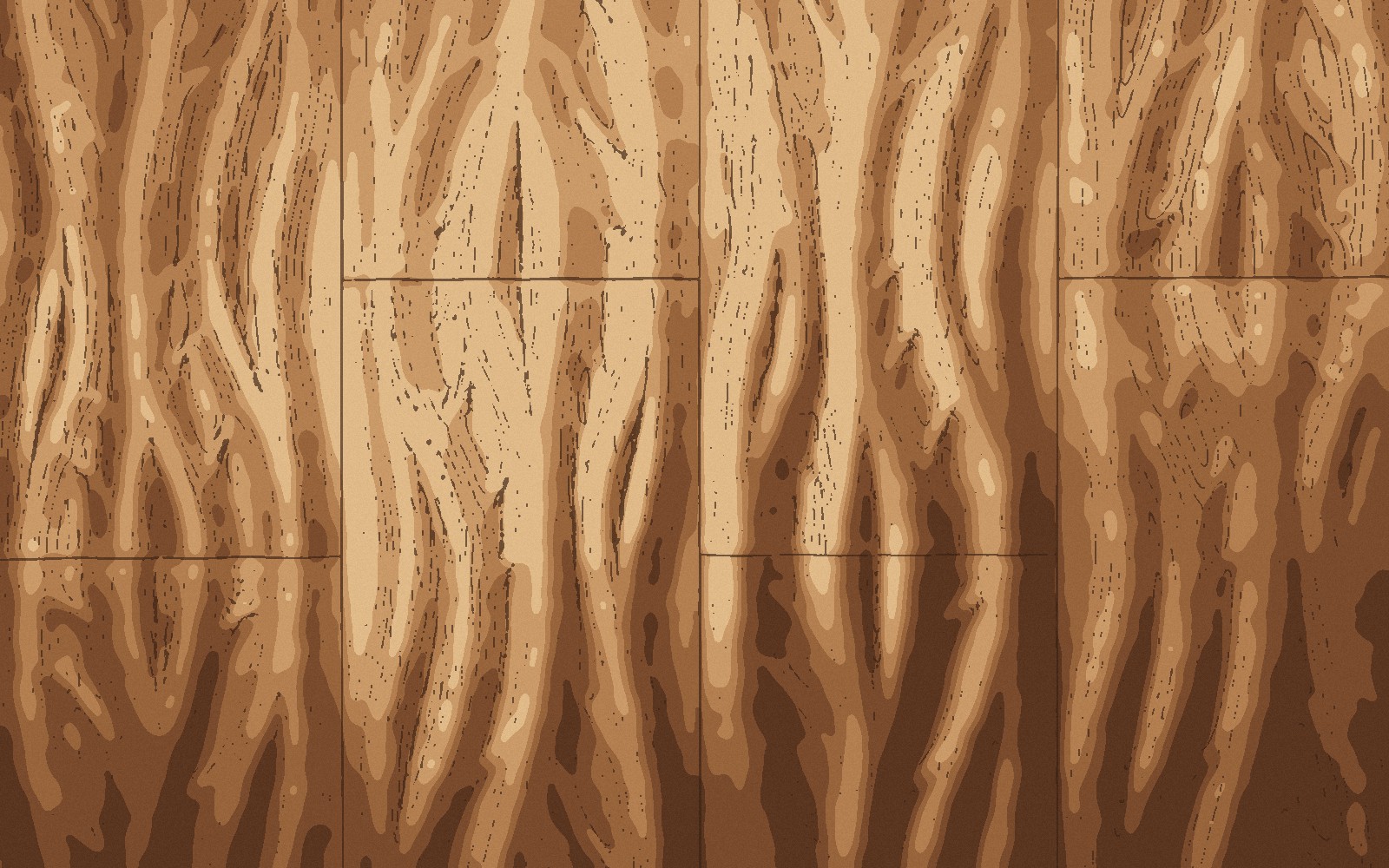
Wood fibres grow along paths determined by stress. Around a branch, they bend. Where loads increase, the structure reinforces itself. Where less material is necessary, nature does not waste it.
It is an engineering system refined over hundreds of millions of years.
And a startup born in Chile thinks we should start copying it.
Wood, but programmed
Founded in 2018 by Andrés Mitnik, Daniel del Río and Jorge Christie, Strong by Form has developed a technology called Woodflow®, which combines computational design, engineered fibre orientation and digital manufacturing to create wooden components whose internal structure follows the forces passing through them. The company was founded in Chile and now operates internationally, including from Spain and Germany.
That distinction matters.
Traditional timber construction largely asks: how can we make wood into a beam, board or slab?
Strong by Form asks something different:
What shape would wood take if we could tell every fibre exactly where to go?
Its software analyses the loads a component will experience and then determines where wood fibres should be concentrated and how they should run through the structure. The company describes the approach as “tailored fibre architecture”: rather than distributing material uniformly, Woodflow follows stress lines in much the same way a tree naturally organises its fibres.
The result barely resembles conventional timber.
Woodflow components curve, split and flow into each other. Surfaces resemble muscles, bones, tree roots or geological formations. Some look almost grown rather than manufactured.
And those curves aren’t simply there because they look good.
They are part of the engineering.
Nature doesn’t make rectangles
Modern manufacturing loves straight lines.
Sheets. Blocks. Beams. Plates.
They are easy to produce, stack and standardise. But nature rarely works that way. Bones, branches and shells change thickness continuously because different parts of a structure need different amounts of material.
Strong by Form’s computational tools allow wood to behave similarly.
Complex double-curved geometries provide rigidity while fibre orientation reinforces areas where forces are concentrated. Its manufacturing process then turns those digital designs into physical components.
It is essentially biomimicry translated into industrial manufacturing.
Instead of asking nature for a new material, Strong by Form is asking nature how to use an old one better.
And that’s where the idea becomes much bigger than an interesting wooden object.
The real target is concrete
Strong by Form’s most ambitious product is Woodflow-core, a prefabricated structural flooring system aimed at applications currently dominated by reinforced concrete.
The company says its system can achieve structural spans beyond 10 metres while dramatically reducing weight. Its published technical figures state reductions of roughly 90% relative to reinforced-concrete slabs, although another recent description from VINCI’s innovation platform Leonard puts the figure at around 80%. The company says physical testing and finite-element modelling have validated its long-span designs.
That discrepancy in quoted weight savings is worth remembering: Woodflow-core is still being industrialised rather than being a mature structural standard.
Strong by Form itself currently describes Woodflow-core as Technology Readiness Level 6, meaning advanced prototypes exist and the system is being tested and validated, rather than already replacing concrete across commercial buildings.
But that may be exactly why the company is interesting now.
The story isn’t that concrete has already been replaced.
It’s that timber is beginning to compete for jobs we once assumed timber simply couldn’t do.
In 2025, Strong by Form unveiled a 10-metre Woodflow-core slab and announced plans for a Spanish pilot facility focused on manufacturing and certification.
And in September 2026, VINCI’s Leonard announced that Strong by Form had secured €5.8 million in the first part of a planned €10 million Series A, money intended to accelerate industrialisation of the technology.
This is no longer just a laboratory experiment.
And then they made a bicycle
Perhaps the easiest way to understand Woodflow isn’t a building at all.
It’s this:
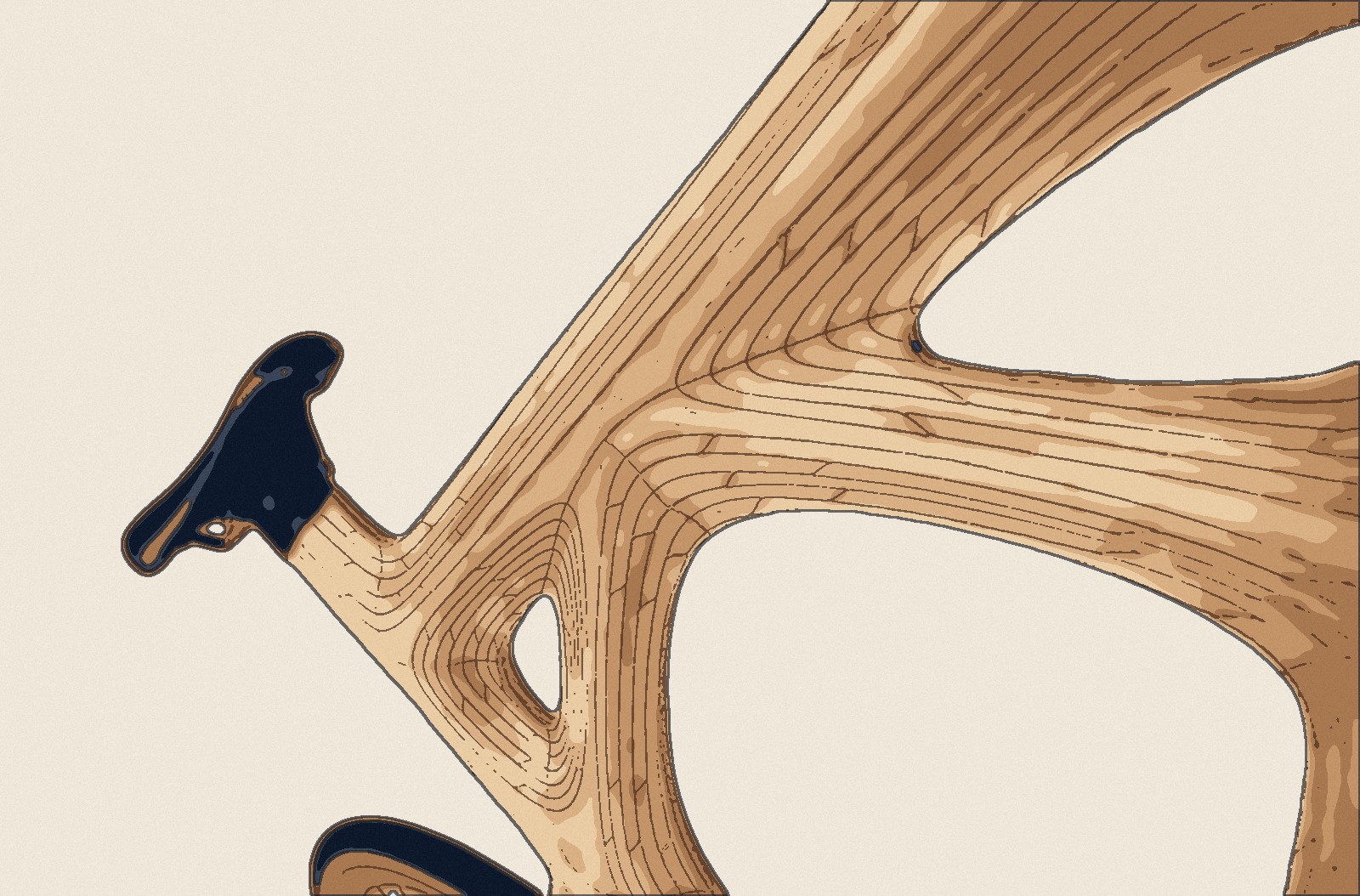
That frame isn’t wooden simply because somebody thought a wooden bicycle would look nice.
It is a demonstration of what happens when wood is treated more like an advanced composite.
The frame uses hollow, curved forms with fibres arranged according to structural loads: a geometry much closer to an engineered carbon-fibre object than a traditional timber product.
The project won an innovation award at JEC World 2025, one of the major international events for composite materials. Strong by Form has also worked on proofs of concept involving companies including BMW, while its mobility work has included projects with Dutch rail operator NS and train manufacturer Talgo.
And that’s what makes the bicycle important.
It demonstrates that Woodflow isn’t necessarily a construction technology.
It is potentially a manufacturing platform.
Cars. Trains. Furniture. Building structures. Interiors.
Anywhere a lightweight, shaped component is required, the same underlying logic could theoretically be applied.
The beautiful part comes first
Oddly, the company’s most commercially mature product isn’t the giant structural slab.
It’s the wall.
Woodflow-skin translates the same manufacturing approach into sculptural architectural surfaces. The panels are 88% natural wood, can be formed into complex three-dimensional geometries and weigh about 6.9 kg per square metre. A mechanical fastening system allows panels to be removed and reinstalled rather than permanently glued into place.
The effect is gorgeous.
Ripples appear to travel through solid wood. Grooves merge together. Flat walls suddenly behave almost like textiles.
And unlike Woodflow-core, this side of the technology is already in real buildings.
Woodflow-skin has appeared at VINCI’s London headquarters, a Bang & Olufsen store in Santiago and other commercial interiors. In June 2026, Strong by Form completed a large installation at Quito International Airport, made from Ecuadorian balsa wood in collaboration with 3A Composites and airport operator Corporación Quiport.
It creates an unusual path to market.
People can experience the aesthetic version of the technology before the structural revolution is finished.
The smartest part may actually be the business model
There is another reason Strong by Form is worth watching.
It doesn’t appear to want to become the world’s largest timber manufacturer.
Instead, the company says it intends to work with existing mass-timber manufacturers and use their industrial capacity to distribute its technology.
That is potentially much more scalable.
Think of Woodflow not simply as a piece of wood, but as a combination of software + manufacturing know-how + material science.
The value lies partly in knowing how to transform an ordinary biological material into a high-performance component.
If that knowledge can eventually be deployed through existing factories, Strong by Form doesn’t need to build every factory itself.
It becomes something closer to an operating system for engineered timber.
A 21st-century material that happens to be ancient
There is something beautifully backwards about Strong by Form.
For decades, our definition of an advanced material has usually meant inventing something more synthetic: carbon fibre, polymers, composites, alloys.
Strong by Form is moving in the opposite direction.
Take one of humanity’s oldest construction materials.
Add computational modelling.
Add robotic manufacturing.
Study how trees distribute fibres.
And suddenly wood begins entering conversations about applications normally reserved for concrete, aluminium and advanced composites.
The innovation isn’t really wood.
The innovation is the information embedded inside it.
A tree already knows how to build a lightweight structure.
Strong by Form is trying to turn that knowledge into an industrial technology.
And perhaps the strangest part of the story is that the architecture of the future may not come from inventing an entirely new material.
It may come from finally understanding one that has been standing outside our windows all along.