Sunlight, sold after dark
A California startup wants to put mirrors in orbit and sell sunlight after the sun goes down. Sequoia is backing it. Astronomers are furious.
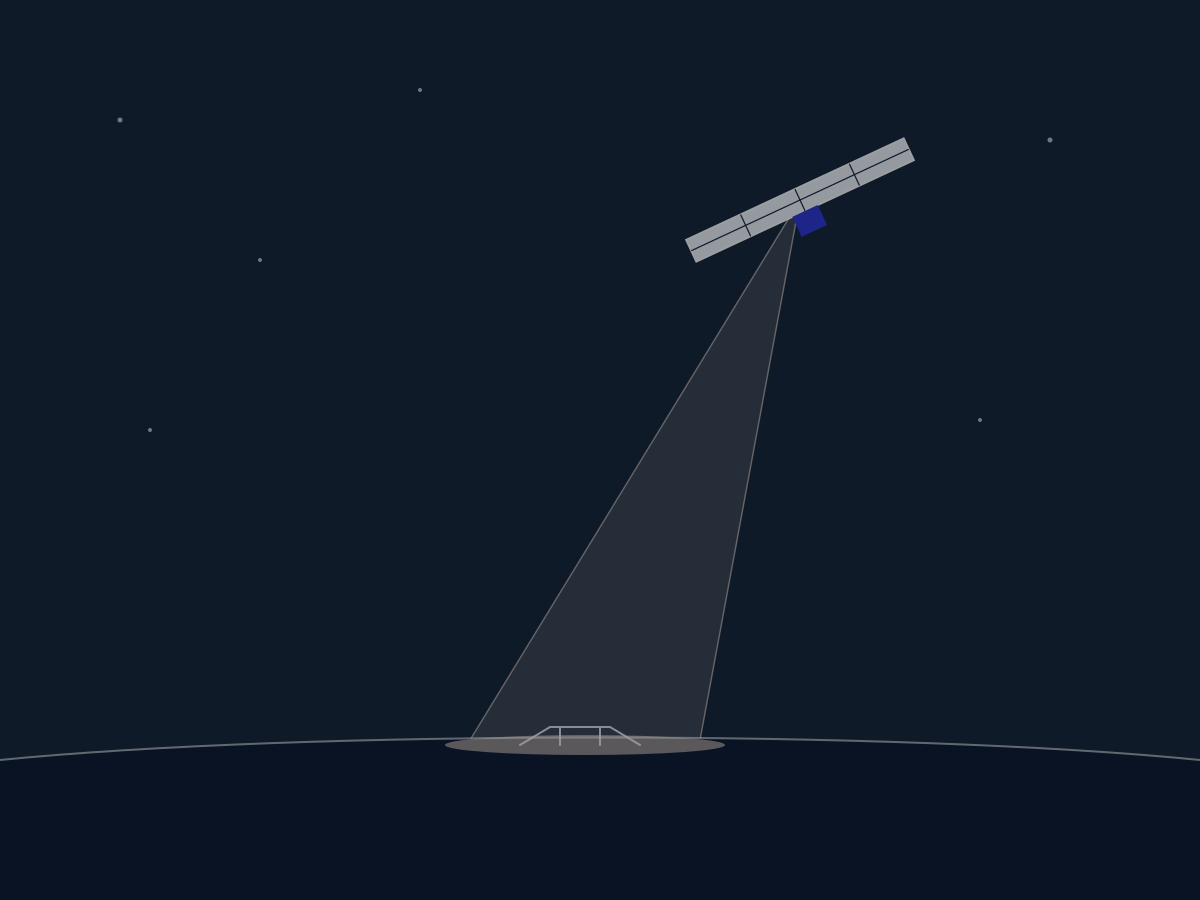
For all of human history, the sun going down has been non-negotiable. Reflect Orbital would like to negotiate.
The startup is building satellites that carry huge, feather-light mirrors. From orbit, a mirror can catch sunlight that would otherwise sail past the Earth and bounce it down onto one chosen spot on the night side of the planet. In other words: sunlight, delivered on demand, after dark.
A YouTube builder with a very big idea
Ben Nowack is the kind of engineer who builds a turbojet engine at home for fun, and films it. His YouTube channel, where he made ambitious machines from scratch, gathered a following of fellow tinkerers. One of them was Tristan Semmelhack, then a student at Stanford.
The two later met properly at Zipline, the company that delivers medical supplies by drone, after Nowack had worked as an engineer at SpaceX. Late-night conversations about wild ideas kept returning to one of Nowack's: most solar innovation tries to squeeze more electricity out of each panel, or to store power better in batteries. What if, instead, you simply gave the panels more hours of sunlight?
Nowack founded Reflect Orbital in October 2021. Semmelhack took leave from Stanford in 2022 to join as chief technology officer.
Most solar innovation makes panels better. Reflect Orbital wants to make the day longer.
How it works
The first test satellite, Eärendil-1, carries a square mirror roughly 18 metres across that weighs only about 16 kilograms: thin enough to fold up for launch and unfold in space. From an orbit around 600 kilometres up, it should be able to light a patch of ground about as brightly as a full moon, for a few minutes at a time as it passes overhead.
A single mirror is a demonstration, not a business. The plan is a growing constellation working together, so that many mirrors can point at the same spot one after another, creating longer and brighter light. The company has talked about dozens of satellites by 2027 and thousands by the end of the decade. US regulators approved the test launch in July 2026.
Going viral, and getting funded
In 2024, a video of Nowack explaining the plan spread across the internet, attracting as much mockery as excitement. It also caught the attention of Sequoia Capital, one of Silicon Valley's most famous investors. Sequoia led a $6.5 million seed round, reported to be its first space investment since SpaceX. A $20 million Series A followed in 2025, co-led by Lux Capital and Sequoia, along with a research contract from the US Air Force Research Laboratory. In total the company has raised more than $35 million.
The strategy: sell light, not satellites
Reflect Orbital does not plan to sell hardware. It wants to sell a service: light, delivered to a specific place at a specific time. Its first target customer was solar farms, which could keep generating electricity after dusk. But demand has come from unexpected directions. The company says that by the end of 2025 it had received more than 260,000 requests for night-time light, for construction sites, public events, search and rescue, disaster relief and military operations.
That breadth is the real bet. If light can be booked like a taxi, the market is not only energy: it is anyone who needs to see in the dark without building towers of floodlights.
What could stop it
Plenty. The American Astronomical Society opposed the licence, warning that satellites designed to be as bright as possible would make observing the universe much harder, especially as the number grows. Dark-sky campaigners worry about artificial light disrupting sleep, wildlife and plants, and light will inevitably spill beyond the target area. Energy experts point out that for storing solar power overnight, batteries are already far cheaper than mirrors in space.
Then there is the question engineering cannot answer: who gets to decide what the night sky looks like? Reflect Orbital is betting the answer will be whoever is willing to pay for the light. Regulators may decide otherwise.
Why it matters
Whether or not it succeeds, Reflect Orbital is a perfect example of first-principles thinking: questioning something everyone accepts, in this case that night is simply dark. The idea may turn out to be brilliant, dangerous, or both. Either way, it forces a conversation about who owns the sky.
Should anyone be allowed to sell the night?


