Savor Makes Butter From Carbon. The Bigger Plan Is to Make Agriculture Optional.
The Bill Gates-backed startup has raised $65 million to manufacture edible fat without cows, crops or farmland. Butter is only the demonstration. The real business could be rebuilding one of the most important ingredient supply chains on Earth.
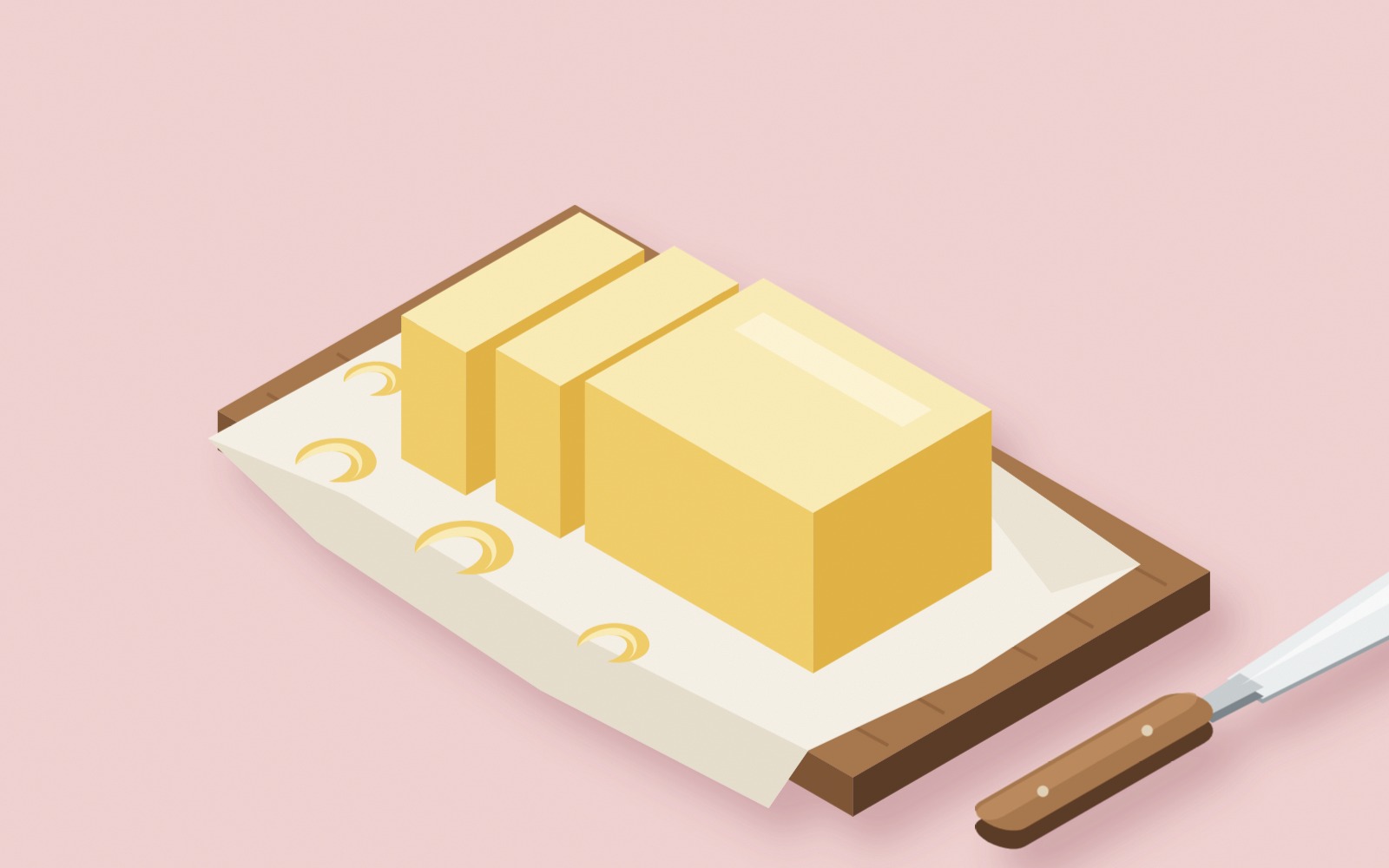
Butter is having a moment. Chefs are treating it with the seriousness normally reserved for wine, specialist butter shops have appeared, restaurants are experimenting with elaborate flavoured varieties, and consumers have rediscovered an ingredient that spent years being treated as something to avoid. In other words, this would be a particularly inconvenient time to tell people that the future of butter might involve getting rid of the cow. Savor goes further. It gets rid of the plant too. The California food-tech company does not use cream, soybeans, coconuts, palm fruit or even the microorganisms used in precision fermentation. Instead, it starts with some of the simplest ingredients imaginable: carbon, hydrogen and oxygen. Through a thermochemical process involving heat, pressure and catalysts, those elements are assembled into fatty acids and eventually triglycerides, the same fundamental molecules that make up the fats humans already eat. The result can then be formulated into something that behaves remarkably like dairy butter.
It sounds like a science experiment that should still be trapped inside a university laboratory. It is not. Savor launched its first commercial butter in 2025, and its products have since appeared in Michelin-starred kitchens and San Francisco bakeries. In 2026, it closed another $32 million strategic financing round, taking its reported total funding to around $65 million, and signed a significant development and commercialisation partnership with AAK, one of the world's largest specialty fats companies. Its pilot operation in Illinois is being expanded from production measured in a few tonnes per year toward hundreds of tonnes, while the company is already thinking about a commercial facility capable of approaching 10,000 tonnes annually. But the butter itself is almost a distraction. Savor is not really building a butter company. It is trying to create an entirely new way of manufacturing fat. And fat is one of the most universal ingredients in the global food system.
Food without agriculture
Savor was founded in 2022, emerging from work at climate-focused R&D organisation Orca Sciences. CEO Kathleen Alexander, a materials scientist with a PhD from MIT, and co-founder Ian McKay had been exploring a question that sounds almost deliberately provocative: could humans produce food without agriculture at all? Not merely make farming more efficient or substitute cows with plants, but bypass much of the biological production chain altogether. The idea becomes less absurd when food is considered at the molecular level. A cow does not magically create butterfat. It eats plants, those plants used sunlight to capture carbon, the animal digests and rearranges those molecules, humans milk the cow, transport the milk, separate the cream and churn it. Savor's thesis is that the process contains an enormous number of biological middlemen. If the final product is ultimately a particular arrangement of carbon, hydrogen and oxygen atoms, why not begin much closer to the atoms themselves?
That thinking contributed to a peer-reviewed paper published in Nature Sustainability called “Food without agriculture,” which examined whether major nutrients could be produced through chemical or biological processes without conventional agricultural inputs. Fat emerged as a particularly attractive candidate for a surprisingly technical reason. Many carbohydrates and amino acids have complicated molecular chirality, meaning they can exist in different three-dimensional orientations and biology is extremely good at producing the versions humans can use. Industrial chemistry is not always as selective. Fats are structurally simpler. Humanity also already has extensive industrial experience making related molecules through processes used in petrochemicals, waxes, detergents and other industries. Savor's breakthrough was therefore not simply realising that food could be chemically manufactured. It was recognising that fat might be one of the first parts of food where doing so actually makes industrial sense.
The phrase “butter made from air” has followed Savor because it is irresistible as a headline, although it simplifies the chemistry. Savor can use captured carbon dioxide as a carbon source, but the system is deliberately carbon-source agnostic and can also work from methane and potentially other carbon-containing feedstocks. The simplified process begins by converting carbon-containing gases into hydrocarbon chains, producing wax-like molecules that can then be turned into fatty acids. Those fatty acids are attached to glycerol molecules to form triglycerides. Triglycerides are not an imitation of fat; they are essentially what fat already is. Butter, beef fat, olive oil, cocoa butter and the fat stored inside the human body are all largely made from them. What changes is the combination, arrangement and proportion of the fatty acids attached.
This gives Savor a capability agriculture does not naturally offer: control. If the company wants a fat with a higher melting temperature, it can adjust its composition. If it needs something softer, more spreadable, more brittle or closer to cocoa butter or beef tallow, it can change the mixture. Savor is effectively treating fat as a programmable material. Over time, the company is building a knowledge base connecting molecular composition with characteristics such as melting point, mouthfeel, viscosity, hardness and stability. Agriculture gives manufacturers the composition that a cow, cocoa tree or oil palm happens to produce. Savor wants to begin with the opposite question: what properties does the customer actually need?
Why start with butter?
Choosing butter as the first product was not about entering the supermarket dairy aisle. In many ways, butter was chosen precisely because it is difficult. It is roughly 80 to 82% fat, which leaves very little space to disguise an inferior formulation behind water, sugar or flavourings. Milkfat itself is chemically complicated, containing many different fatty acids that together create butter's familiar behaviour. More importantly, butter has to do far more than taste buttery. Straight from the refrigerator it should be firm, at room temperature it gradually becomes spreadable, inside the mouth it melts, and when repeatedly folded through pastry dough it needs enough plasticity to create delicate layers without shattering or simply leaking out. Savor even used croissant lamination as one of the ultimate tests of whether the product actually behaved like butter.
That makes butter an unusually clever proof of concept. If Savor can replicate one of the most complicated and functionally demanding fats people regularly eat, producing simpler fats becomes substantially more believable. And instead of relying on ordinary consumer taste tests, the company turned chefs into an unofficial R&D department. Early collaborators included Michelin-starred SingleThread, ONE65, Jane the Bakery and other culinary operators. They fried with it, baked with it, froze it, laminated pastry with it and used it in recipes where poor fat performance would be immediately obvious.
Importantly, the feedback was not always flattering. At Michelin-starred vegetarian restaurant Dirt Candy, an early formulation performed structurally but was considered too intensely buttery for certain applications. Savor responded by accelerating work on a milder version. That sort of criticism is extremely valuable because professional chefs can diagnose exactly what is wrong. The issue may be brittleness, melting behaviour, plasticity, flavour intensity or mouthfeel rather than a generic answer of “I don't like it.” By 2026, Jane the Bakery was selling products including scones and an apple coffee cake muffin made using Savor EcoButter, with its founder saying the product performed far more like dairy butter than other vegan alternatives the bakery had tried. Michelin restaurants are therefore not Savor's end market. They are its test track. High-end chefs provide brutal product validation and cultural credibility. Industrial food manufacturers provide the scale.
And this is where Savor's strategy becomes much clearer. The company does not primarily want to build the next Kerrygold. It wants to become an ingredient supplier. Butter makes the technology understandable, but the wider commercial opportunity sits inside croissants, chocolate, cookies, fillings, ice cream, whipping creams, dairy alternatives and eventually products far beyond food. This is strategically very different from asking consumers to abandon familiar foods and adopt a completely new category. Savor can instead replace an ingredient inside something people already buy. A consumer does not necessarily need to become passionate about carbon-derived fat. If the croissant tastes identical and costs the same, they may not need to change their behaviour at all. The easiest consumer behaviour to change is sometimes no behaviour at all.
Butter is only the first SKU
The platform becomes far more interesting when you realise the same chemistry can potentially produce milkfat, palm-like fats, cocoa-butter alternatives, beef tallow, lard and liquid vegetable oils. The production system does not need a new animal or plantation every time Savor enters another category. It changes the fatty-acid formulation. At that point the company begins to look less like a food startup and more like a molecular refinery for fats. A cocoa-butter supplier depends on cocoa trees. A palm-oil company depends on plantations. A dairy business depends on cattle. Savor wants one underlying manufacturing platform capable of addressing multiple markets.
Even more interestingly, the ultimate goal does not necessarily have to be perfect imitation. A chocolate company may want something with cocoa butter's characteristic snap but an easier tempering profile. A bakery might want a butterfat alternative that remains stable for longer. A manufacturer could request a melting curve that simply does not exist naturally. The long-term product is not synthetic butter. It is configurable fat. That makes the company much more similar to a materials-science business, where molecular properties can be designed around industrial requirements rather than discovered inside nature.
Chocolate is already showing how this strategy might work. In 2026, Savor partnered with California chocolate maker TCHO on a product called A Bite of the Future. It combined Ghanaian cacao with roughly 5% Savor EcoButter, creating a dark chocolate with a softer and creamier texture more commonly associated with milk chocolate while remaining dairy-free. But Savor is also developing alternatives to cocoa butter itself, which is strategically more interesting because cocoa supply has experienced extreme volatility linked to poor harvests, climate pressures and geographic concentration. The sales pitch is therefore beginning to change. Savor executives have said that conversations with large food companies are moving away from being purely about sustainability and increasingly toward supply-chain resilience.
That change could matter enormously. “Use our ingredient because it is better for the climate” speaks to a sustainability team. “Use our ingredient because a failed harvest should not destroy your margins” speaks to the CFO, procurement team and CEO. Agricultural commodities expose manufacturers to weather, geopolitical shocks, changing harvest volumes and concentrated production regions. Manufactured fats could provide a second source. Savor does not need to eliminate agriculture to build a huge business. A chocolate company could source 90% of its fats conventionally and 10% through manufactured alternatives, increasing or reducing that proportion depending on prices, shortages or emissions targets. Savor effectively becomes a second supply chain sitting beside agriculture, and diversification is often easier to sell than revolution.
The AAK deal shows where this is really going
Perhaps the most strategically important event for Savor in 2026 was not a chef endorsement but its agreement with AAK, a Swedish fats-and-oils specialist with 19 production facilities and 16 customer innovation centres around the world. AAK invested in Savor and entered a two-year development and commercialisation partnership focused initially on dairy alternatives and bakery applications in the US and Europe.
The partnership reveals the company's likely route to scale. Savor understands the chemistry, but AAK already understands industrial fats, food formulation, regulation, customer relationships, factory requirements and global distribution. Rather than spending twenty years recreating the incumbent food industry's infrastructure, Savor can plug its technology into somebody who already owns it. This is a useful reminder that vertical integration is not always the smartest startup strategy. Sometimes what a company needs is borrowed scale. AAK's willingness to invest also creates an interesting dynamic: an incumbent whose business still relies heavily on conventional fats is buying exposure to a future in which some fats may no longer need to be grown.
Savor's investor list shows just how unusual the platform has become. In addition to climate-tech backers, it has attracted strategic investment from United Airlines Ventures. Why would an airline care about butter? Because Savor's chemistry overlaps with the broader world of renewable hydrocarbons. Aviation desperately needs lower-carbon ways to produce hydrocarbon molecules for jet fuel. Savor is building different molecules for food, but the industrial logic has similarities. United even showcased Savor's TCHO collaboration alongside next-generation aviation technology at an event in its Los Angeles hangar. When an airline, a global fats company, climate investors and Michelin chefs can all see strategic value in the same startup, the platform is probably more important than the initial product.
From laboratory chemistry to commodity economics
This is also where Savor faces its hardest challenge. Its first production facility, SavorWorks1, is a 25,000-square-foot site in Batavia, Illinois. Rather than constructing everything from zero, the company acquired an existing fats-and-oils facility and repurposed equipment and infrastructure where possible. By mid-2025, it was aiming for production of around 100 kilograms per week. The latest funding is being used to push that facility from production measured in a handful of tonnes per year toward a few hundred tonnes. Beyond that is the much more serious industrial challenge: a purpose-built commercial operation producing something close to 10,000 tonnes annually.
This is where countless food and climate technologies become stuck. Making five kilograms of exceptional butter proves the science. Making 10,000 tonnes at consistent food-grade quality and competitive cost proves the company. The gap between those two achievements is enormous. Reactors need to operate reliably, energy must be affordable, feedstocks have to be available, purification needs to scale, customers demand guaranteed volumes and every additional kilogram eventually needs to become cheaper. Savor has demonstrated that the chemistry works. What it has not yet fully demonstrated is that the chemistry can become a commodity industry.
The number that may ultimately matter more than the company's funding total is therefore around $5 per kilogram. Kathleen Alexander has said that early commercial customers were paying prices broadly comparable with premium butter even though Savor itself was not yet producing the ingredient at fully competitive economics. The company was effectively absorbing part of the cost while learning. Its first larger commercial plant is intended to compete closer to conventional commodity butter pricing, roughly around $5 per kilogram, while the truly ambitious long-term target is eventually approaching the economics of inexpensive commodity fats such as palm oil, closer to $1 per kilogram at enormous scale.
That ambition explains the technology choice. Savor did not choose cultivated cells or a fermentation process dependent on organisms being fed sugar. It deliberately built around chemistry whose underlying industrial processes already exist at enormous global scale. The dream is not to manufacture the world's fanciest butter. It is eventually to manufacture some of the world's cheapest fat. If it achieves that, the addressable market changes from niche sustainable ingredients to global commodity supply.
The climate argument is strong, but not magical
The environmental argument is also more nuanced than the headline “butter from CO₂” suggests. Conventional fat production uses land, water and agricultural systems. Dairy requires feed crops and cattle and generates methane. Palm and soy can create land-use and deforestation pressures. Savor's approach removes much of that footprint. The original Nature Sustainability research suggested that synthetically produced fats could require orders of magnitude less land than agricultural alternatives and, depending on the energy and carbon feedstocks used, substantially reduce greenhouse-gas emissions.
By 2026, the company had pilot-plant data rather than only modelling. According to Savor's description of an independent ISO-certified life-cycle assessment, its first milkfat alternative used more than 800 times less land and more than 10 times less water and produced over 80% lower greenhouse-gas emissions than conventional milkfat under the methodology it highlighted. But there is an important caveat: carbon butter is not automatically low carbon. The result depends heavily on the carbon source and the electricity used. Savor estimated around 2 kg CO₂e per kilogram of fat using CO₂-derived carbon under its current assumptions versus approximately 5.5 kg if methane is used. It says the feedstock is one of the biggest drivers of environmental performance.
And while Savor can place captured carbon dioxide into food molecules, eating the product is not permanent carbon sequestration. Human metabolism eventually turns much of that carbon back into CO₂, which is exhaled. The company itself acknowledges this rather than pretending that eating butter somehow stores carbon permanently. This actually makes the climate story more credible. Savor's environmental advantage is not that people are eating and permanently storing CO₂. It is that manufacturing certain molecules could require dramatically fewer resources than growing the same molecules through plants and animals.
The consumer problem
The technical challenge may not even be the hardest cultural one. Savor still has to persuade people that chemically manufactured food is something they are comfortable eating. In the US, the company has completed a self-affirmed GRAS determination, meaning experts concluded that its intended ingredient use meets the Generally Recognized as Safe standard under the existing American framework. It has also been working through additional FDA notification and international regulatory pathways.
The wider GRAS system itself is evolving. In August 2026, the FDA proposed moving toward a mandatory GRAS notification system, which would increase transparency and oversight around newly introduced food substances. For Savor, more formal regulatory validation may ultimately help because its challenge is not convincing chemists that atoms can be rearranged into triglycerides. It is convincing ordinary consumers that words such as “methane”, “synthetic” and “chemical” do not automatically mean unsafe.
The language problem is obvious. Compare these two descriptions: “scientists have replicated the same fat molecules found in food using much less land and water,” and “this croissant contains fat manufactured from methane.” They describe essentially the same technology and create completely different emotional reactions. Food is emotional in a way software is not. People have memories, traditions and cultural attachments built around butter, chocolate and cooking. Nobody has ancestral feelings about cloud computing.
That makes Savor's B2B ingredient strategy even more intelligent. It does not necessarily need consumers to enter a supermarket demanding “carbon butter”. Its ingredient can sit quietly inside products customers already understand. The visible promise becomes flavour, price, reliability and perhaps environmental benefit rather than novelty. Savor has already begun using language such as Carbon Crafted™ and EcoButter™, positioning the process as precision rather than artificiality.
It is also worth separating sustainability from health. Savor's product is still fat. It contains calories, and the human body processes its triglycerides through the same fundamental pathways used for other dietary fats. The company is studying whether particular fatty-acid combinations might eventually have nutritional advantages, but those possibilities are still under investigation. The current breakthrough is primarily environmental and industrial, not nutritional. Savor is changing where fat comes from, not eliminating what fat is.
The hidden moat may be the recipe book
At first, Savor's intellectual property appears to sit mostly in the chemistry used to turn carbon into fatty acids. But over time another asset could become just as important: its formulation data. Every product teaches the company something about how molecular structure translates into culinary performance. Which combination produces the correct melting curve? Which creates a better snap in chocolate? Which performs best in lamination? Which feels creamy rather than waxy? Which survives transportation or long shelf life?
As Savor develops more products and works with more manufacturers, those relationships accumulate. A flywheel begins to appear. More customers create more applications. More applications create more experiments. More experiments generate more molecular-performance data. More data makes it easier to design the next fat. Eventually Savor's competitive advantage may not simply be knowing how to make fat from carbon. It may be knowing exactly which molecular combination every food manufacturer should request. That is closer to a materials-science database than a traditional food recipe book, and it may be much harder for a new competitor to reproduce.
Savor is not alone. Companies such as Melt&Marble are using engineered yeast to produce designer fats through precision fermentation, while businesses such as C16 Biosciences are developing microbial alternatives to palm- and cocoa-derived fats. Savor's difference is that no microorganism needs to manufacture the fat. There is no engineered yeast being fed sugar inside a fermentation vessel. The components are created through chemistry. The philosophical difference is almost elegant: fermentation companies argue that biology is an incredible factory and should be reprogrammed; Savor is asking whether, for something as chemically straightforward as fat, a biological factory is necessary at all.
What happens if food becomes manufacturing?
For roughly 10,000 years, producing more food has mostly required some variation of the same process: find land, grow something on it, feed plants to humans or animals, harvest and repeat. Agriculture became so fundamental to civilisation that we rarely even think of it as a technology.
Savor is not about eliminating farms. We will still need fruits, vegetables, grains, culture, landscapes and the enormous variety of foods agriculture produces. But some of the invisible molecules that give food richness, texture and energy may not always need to come from fields or animals. A future chocolate factory could still use cocoa beans from Ghana while sourcing part of its fat from a chemical manufacturing facility. A bakery could use conventionally grown wheat and non-agricultural butterfat. A plant-based burger could contain fat designed specifically to melt like beef tallow. Food manufacturers could increase manufactured-fat purchases during commodity shortages and reduce them when agricultural prices fall.
Savor is effectively asking whether parts of the food supply chain can begin behaving like manufacturing rather than farming.
That is why butter is such a clever first product. Show somebody a newly synthesised triglyceride and the technology feels abstract. Put it onto warm bread and they understand immediately. Butter turns chemistry into something emotional, familiar and testable. And it disguises how radical the underlying proposition actually is. We have spent thousands of years asking nature to manufacture our food molecules for us.
Savor is asking whether, for some of them, we can manufacture the molecules ourselves. Its first answer happens to be a pale yellow block of fat. But behind that butter is a $65 million experiment in chemistry, climate technology, commodity economics and the future of global food supply.
The cow is almost beside the point. So is the butter.
Savor's real product is the possibility that food no longer has to begin on a farm.
Research updated 8 October 2026.