Basecamp Is Building the Internet for Biology
The $800 million London startup is searching glaciers, oceans and rainforests for genetic code that AI has never seen. Its bet is that the next great advantage in artificial intelligence will not come from a better model, but from owning the data evolution spent four billion years creating.
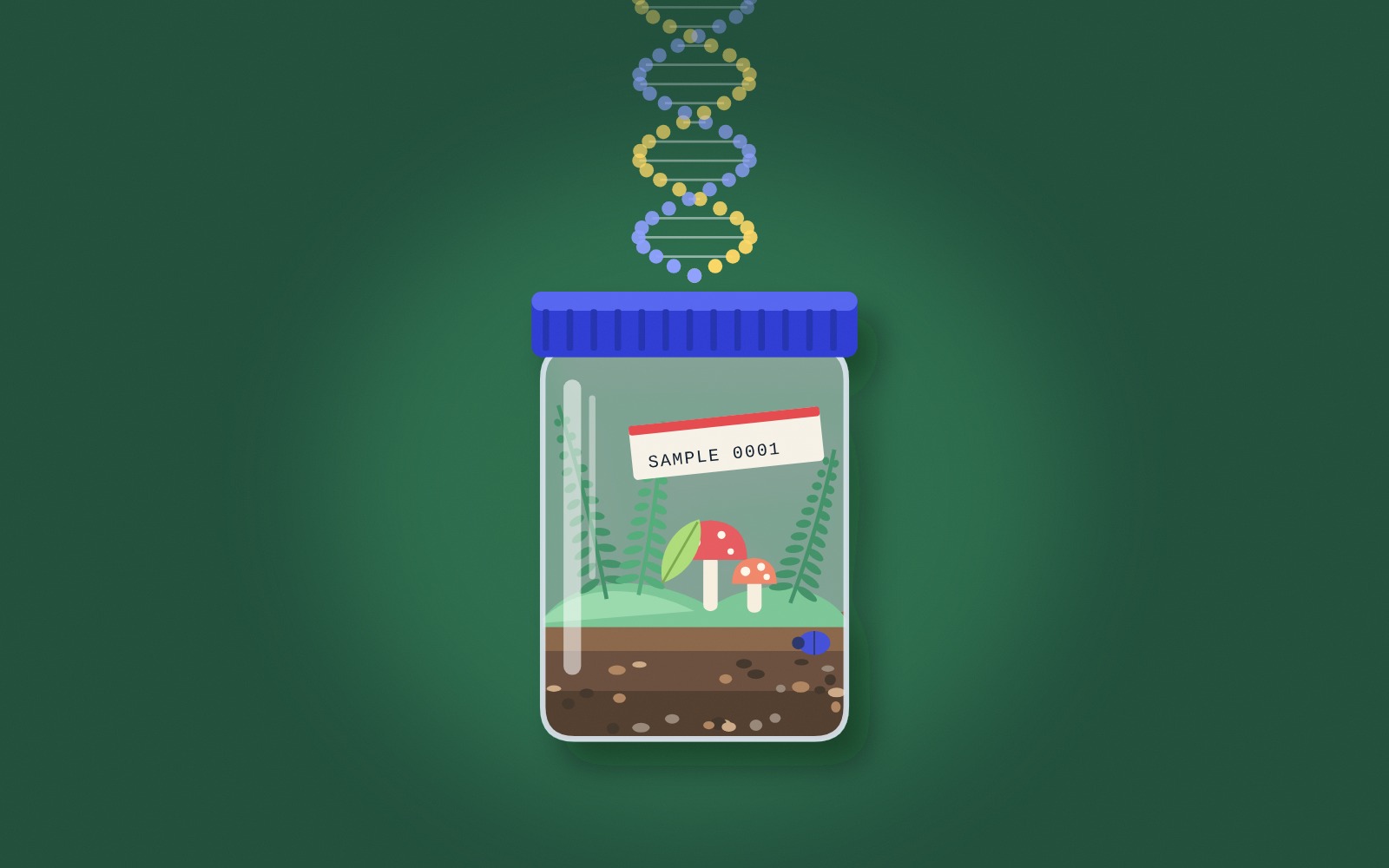
Artificial intelligence has spent the last decade consuming almost everything humans have written. Books, websites, code repositories, scientific papers and images became the raw material from which enormous foundation models learned to predict language, generate software and reason across increasingly complicated problems. Biology would appear to offer an even larger training set. Life has been experimenting for roughly four billion years, producing organisms capable of surviving boiling water, Antarctic ice, toxic environments, crushing ocean pressure, infectious disease and almost every ecological challenge imaginable. Somewhere inside their DNA are proteins, enzymes and biological mechanisms that medicine has never studied. There is just one problem: most of that information is not on the internet.
That is the problem Basecamp Research decided to solve. The London-founded company sends researchers into environments around the world to collect biological samples, sequence the DNA inside them and turn that information into training data for artificial intelligence. Its scientists have sampled environments ranging from polar regions to tropical ecosystems, deep-water environments and volcanic landscapes. Instead of training solely on the familiar genetic information accumulated in public databases, Basecamp is trying to create an entirely new dataset from biology that was previously invisible to AI. The company now says its broader data estate contains more than 100 billion novel genes and more than 100 trillion biological tokens, sourced through partnerships across more than 30 countries and all seven continents. Its current 28-billion-parameter AI model, EDEN, was trained on 9.7 trillion nucleotide tokens from an earlier version of that corpus.
Investors have noticed. On 23 September 2026, Basecamp announced an oversubscribed $140 million Series C, led by S32 and joined by NVIDIA, Anthropic's Anthology Fund, the NATO Innovation Fund, the Rockefeller Foundation, Catalio, Redalpine, Singular, True Ventures and others. Reuters reported that the round valued Basecamp at $800 million. Combined with its earlier $20 million Series A and $60 million Series B, the company has now raised roughly $220 million. The new money is intended not merely to make its models larger, but to push medicines designed by those models toward clinical development. That makes Basecamp much more interesting than another AI drug-discovery startup. Its real asset may be the supply chain it has built into undiscovered biology.
Basecamp's origin story feels more like an expedition film than a conventional AI company. Co-founders Glen Gowers and Oliver Vince met while studying at Oxford before pursuing work across biological engineering, synthetic biology and cancer research. Both encountered a recurring frustration: researchers would spend enormous amounts of effort trying to engineer better biological systems, only to discover that nature had sometimes already evolved something superior somewhere else. The problem was finding it. That idea became much more tangible during an expedition to Iceland. Gowers and Vince packed a functioning DNA-sequencing laboratory into roughly a nine-litre box, carried it onto Europe's largest ice cap and operated the setup off-grid using portable equipment and solar power. Gowers later described living on the ice cap for around a month. The expedition demonstrated that biological information could be collected and sequenced far away from conventional laboratories rather than waiting for samples to find their way into established academic databases. Gowers is now credited by Basecamp as the first person to sequence DNA entirely off-grid during such an expedition.
The name Basecamp Research came from that world of expeditions. And when the company was founded in 2019, the thesis was relatively simple: nature already contains an enormous library of biological solutions, but scientists have catalogued only a tiny fraction of it. Instead of continuously trying to improve the same familiar proteins, why not go looking for entirely new ones? This is where Basecamp's story starts to diverge from the normal AI playbook. An AI company usually improves its product by buying more GPUs, hiring more researchers or obtaining more data from somewhere else. Basecamp physically manufactures its own training-data advantage by going out into the world and discovering things that were not previously in any database. The expedition is therefore not a quirky piece of company mythology. It is the business model.
To understand why that matters, it helps to think about how biological AI works. DNA is essentially information written using four chemical letters: A, C, G and T. Different sequences contain instructions that ultimately help organisms build proteins and regulate biological processes. AI models can therefore be trained on biological sequences in ways that are conceptually similar to training language models on text. Instead of learning which word tends to follow another word, a biological model learns statistical relationships across DNA, RNA and protein sequences. The analogy is imperfect because biology is governed by chemistry, physics and evolution rather than grammar, but the underlying idea is powerful: show a model enough examples of what evolution has already produced, and it may begin learning rules that allow it to predict or eventually design biology that does not yet exist.
The problem is what you show it. Scientific databases contain an extraordinary amount of genetic information, but Basecamp argues they are both repetitive and heavily skewed toward organisms that humans happen to have studied. In its 2025 BaseData announcement, the company said around 70% of public sequence data came from only ten species. Its own biodiscovery programme had by then generated 9.8 billion new protein sequences from more than one million newly identified microbial species. After removing redundant sequences, Basecamp claimed BaseData contained more sequence diversity than the major public datasets on which many biological models depend. Those figures originated from the company's own scientific preprint and should therefore be read as company-reported research rather than as an independently settled scientific benchmark. Still, the underlying problem is real enough to give Basecamp a distinctive strategy. In normal AI, companies worry that the open internet has been largely consumed already. In biology, an even stranger version of that problem exists: much of the useful training data has never been digitised in the first place. You cannot scrape a bacterium from Google. Someone has to find it.
That produces some wonderfully strange examples. Basecamp researchers and partners have collected microorganisms from places such as a World War II shipwreck, where they identified a previously unknown Burkholderia species from a bacterial group associated with heavy-metal processing and antibiotic resistance. Near an active volcano, researchers identified an organism from the Sulfolobaceae family capable of thriving at extremely high temperatures. Antarctic samples produced another organism able to exploit atmospheric gases in unusually resource-poor conditions.
Nobody knows in advance which of these discoveries will produce a medicine. That is almost the point. Evolution has spent billions of years running experiments under conditions no pharmaceutical laboratory could realistically reproduce. Microorganisms have spent that time fighting each other, defending themselves from pathogens, copying DNA, repairing genetic damage and adapting proteins to extraordinary environments. Every survival mechanism is a potential biological clue. Basecamp is treating biodiversity as R&D that nature has already paid for. A bacterium surviving beside a hydrothermal vent may contain a heat-stable protein useful in manufacturing. A microorganism competing with bacteria around it may have evolved an antimicrobial molecule. Another species may contain an enzyme capable of inserting DNA unusually precisely. The value is not necessarily the organism itself. It is the molecular machinery evolution placed inside it.
This is also where Basecamp's competitive strategy becomes much more interesting. AI models are becoming easier to reproduce. Architectures spread through scientific papers. Open-source models appear. Compute can be rented. Researchers move between companies. Even a very good model risks becoming less differentiated if competitors eventually build something similar. A proprietary dataset that has never existed anywhere else is much harder to copy. To reproduce Basecamp's advantage, a competitor cannot simply download a database or buy more GPUs. It would need relationships with governments, research institutions, nature reserves and scientific partners around the world. It would need sampling operations, sequencing infrastructure, local scientific expertise, permits, logistics, legal frameworks and an ongoing mechanism for sharing benefits with the places from which genetic material originates.
Basecamp currently describes a network spanning more than 200 partner locations across more than 30 countries. Each sample, it says, is connected to informed-consent and benefit-sharing agreements and traceable to country-specific collection permits. That makes the company look less like OpenAI for biology and more like a combination of AI laboratory, pharmaceutical company and global natural-resource supply chain. And the supply chain could be more defensible than the AI.
In March 2026, Basecamp made that ambition even more explicit with the launch of the Trillion Gene Atlas, developed alongside Anthropic, PacBio and Ultima Genomics and powered by NVIDIA infrastructure. The project aims to collect genomic information at extraordinary scale, ultimately targeting more than one trillion genes from over 100 million species across thousands of locations. Basecamp said the intention was to compress what might otherwise take decades of biological data gathering into a much shorter period. The partners themselves reveal how the modern AI economy works. Sequencing companies help turn physical organisms into digital information. NVIDIA provides the computing infrastructure capable of processing it. Anthropic sits on the frontier of foundation-model development and, increasingly, scientific AI interfaces. Basecamp controls the biological collection network and the models trained on that data. What looks like an expedition business is therefore becoming an AI infrastructure stack.
The scale keeps moving. The version of BaseData announced in 2025 contained roughly 9.8 billion novel protein sequences. Basecamp's current site says its overall collection has since surpassed 100 billion novel genes and 100 trillion tokens. EDEN itself was trained on a smaller 9.7-trillion-token snapshot, meaning the company is accumulating new biological data faster than its largest model has yet consumed it. That creates an obvious flywheel. More biodiversity partnerships create more sequences. More sequences improve the training set. A stronger dataset can improve the models. Better models can produce more valuable biological designs. Commercial success gives Basecamp more capital to fund more expeditions and sequencing. Those expeditions create more proprietary data. Then the cycle begins again. The unusual thing about Basecamp is that the AI flywheel starts in the physical world.
All of this genetic information would merely create the world's strangest database if Basecamp could not turn it into useful predictions. That is what EDEN is supposed to do. EDEN is a family of biological foundation models, with the largest disclosed version containing 28 billion parameters and trained on 9.7 trillion nucleotide tokens. Basecamp describes it as a general biological model rather than one designed to solve a single narrow scientific task. The intention is for the same underlying intelligence to operate across problems involving DNA, proteins, peptides, gene editing and other biological systems. This is a significant strategic difference from older computational biology tools. A traditional system might be built specifically to predict a protein structure, identify one class of molecule or optimise one enzyme. A foundation model attempts to learn a much broader representation of biology from which multiple capabilities can emerge.
Language models created a similar transition in computing. We moved from separate systems for translation, summarisation and text classification toward large models capable of handling many tasks through one architecture. Basecamp wants biology to make a comparable move. Instead of building one AI for one molecule, build an AI that understands enough of evolution to design many kinds of molecules. That is an enormous claim, but Basecamp has already started producing results interesting enough to justify attention.
One of EDEN's more striking capabilities involves recombinases. Recombinases are enzymes capable of rearranging DNA. Certain versions can insert genetic material into specific locations in a genome, which makes them potentially valuable for gene therapy. Existing gene-editing approaches such as CRISPR have transformed biology, but different editing methods have different limitations, including the amount of DNA they can insert and whether they require cutting both strands of DNA. Basecamp says EDEN learned patterns from millions of naturally occurring gene-insertion events and designed recombinases capable of putting large DNA payloads into chosen genomic sites without guide RNA, pre-installed landing sites or double-strand DNA breaks. Microsoft, whose Azure infrastructure Basecamp uses, reported that the system achieved 100% coverage across the target sites examined in Basecamp's work.
The significance is easier to understand with an analogy. Some genetic medicines are like correcting a typo in a sentence. Others need to insert an entire new paragraph. Basecamp is interested in building tools capable of writing larger pieces of genetic information into cells with much greater programmability. That is particularly relevant to the company's newest direction: medicines that reprogramme cells. In September, Basecamp said its first internal therapeutic focus would be in vivo cell therapy. Instead of removing a patient's cells, genetically modifying them in a laboratory and then reinfusing them, the goal is to perform some of that reprogramming inside the patient's body. The company says this approach could eventually make sophisticated cell therapies more scalable and easier to administer in areas including cancer and autoimmune disease, although its programmes remain preclinical and no clinical timetable has yet been announced.
That last detail matters enormously. Basecamp has shown interesting biology. It has not yet shown that an EDEN-designed drug works safely in humans. The distance between those two things can be measured in years and hundreds of millions of dollars.
Another EDEN result is more intuitive. Antibiotic resistance is making some bacterial infections increasingly difficult to treat, and one possible solution is antimicrobial peptides: small chains of amino acids capable of attacking bacteria. Basecamp asked EDEN to design them. According to results published by the company and now described through Anthropic's scientific connector, 32 of 33 EDEN-designed antimicrobial peptides were active in laboratory testing, a roughly 97% hit rate. One candidate tested in mice reportedly showed efficacy comparable to a last-line antibiotic on its first experimental pass. Again, this is preclinical evidence, not a finished antibiotic. But strategically, the experiment demonstrates what Basecamp wants EDEN to become. Rather than searching manually through a library for an existing molecule, a researcher could describe the biological problem and ask the model to generate candidates. Search becomes design.
One of Basecamp's smartest 2026 moves was not a scientific paper but a distribution decision. Since June, researchers have been able to connect parts of EDEN directly to Claude. The integration currently offers two research capabilities: generating antimicrobial-peptide candidates against drug-resistant bacteria and predicting whether protein-coding antigens are likely to provoke an immune response. Anthropic labels the integration as research-only rather than a clinical tool. Think about what this means strategically. Basecamp does not have to persuade every scientist to adopt an entirely new AI interface. Anthropic already has one. A researcher can work in a familiar conversational environment and call specialist Basecamp biology models when a task requires them. Claude becomes the interface. EDEN becomes the specialist intelligence underneath it. That resembles the way specialised software services plug into larger computing platforms. Basecamp does not necessarily need to win the consumer AI race. It can become a high-value biological intelligence layer other AI systems access.
This therapeutic focus is actually a strategic evolution. A few years ago, Basecamp's commercial story was much broader. By 2024, it had built more than 100 data partnerships across roughly 25 countries and around 15 organisations were using its AI to develop products. Procter & Gamble was using its technology to design enzymes capable of cleaning stains at lower washing temperatures, while Colorifix was working with Basecamp around more sustainable textile-dyeing biology. That early business model made sense because nature contains enzymes relevant to detergents, industrial chemistry, textiles, food, agriculture and environmental remediation as well as pharmaceuticals.
But healthcare offers dramatically higher potential value. An enzyme that makes detergent work slightly better is useful. A gene-editing system capable of treating an incurable disease can be worth billions. The shift became visible in 2024 when Basecamp raised $60 million and announced a multi-year collaboration with the laboratory of David Liu at the Broad Institute of MIT and Harvard, one of the world's best-known researchers in genome editing. It has accelerated since. Basecamp opened laboratory operations in Cambridge, Massachusetts, strengthened its therapeutic team and brought in executives with experience at companies including Intellia, Tome and Biogen. Its newest funding is explicitly intended to take its own medicines toward the clinic while expanding pharmaceutical partnerships.
Basecamp is moving down the value chain. First it collected data. Then it sold biological insights. Then it built models. Now it wants to own some of the medicines those models create. That progression matters because every step captures more economic value, but also dramatically increases risk.
This creates one of the most interesting strategic questions around the company: what exactly does Basecamp want to become? There are at least three businesses hiding inside it. One is a data business, where pharmaceutical and AI companies could pay for access to proprietary genetic information that would be extraordinarily expensive to recreate. Another is an AI platform business, where customers could use EDEN for protein design, therapeutic discovery or other biological tasks without Basecamp developing the resulting product itself. The third is a biopharmaceutical company, where Basecamp uses its own data and models internally, selects the most promising therapies and takes them toward clinical trials, licensing or commercialisation.
The attraction of doing all three is obvious. The risk is also obvious. Building datasets and AI models is difficult. Developing drugs is one of the most expensive and failure-prone activities in business. Basecamp is attempting to turn a data moat into a therapeutic pipeline before somebody else does it using Basecamp's platform. That could create enormous value if the medicines succeed. It could also transform an elegant AI infrastructure company into a capital-intensive biotech business exposed to clinical failures, regulatory delays and long development timelines.
There is another complication hiding inside the dataset itself: who owns nature's information? For decades, pharmaceutical and biotechnology companies have collected genetic material from biodiverse countries and turned biological discoveries into commercially valuable products. Critics have sometimes described exploitative forms of this practice as biopiracy: wealthy organisations extracting biological resources from countries or Indigenous communities without adequately sharing the resulting benefits. AI makes that debate more complicated because a physical sample can be converted into digital sequence information, copied indefinitely and used to train models years after it was collected.
Basecamp has deliberately built its data strategy around this issue. It says every sample in BaseData is collected under access-and-benefit-sharing agreements, with sequences linked to the permits under which they were obtained. Partnerships can include local scientific training, research funding and financial benefits. In 2024, Basecamp and Cameroon announced one of the country's first formal benefit-sharing arrangements covering digital sequence information. The Financial Times reported that Basecamp's arrangements can include around 1% royalties flowing back to source countries, while also noting criticism that such compensation may still prove small relative to the future commercial value of medicines developed from the data. Critics have also raised questions about what happens to those obligations if the company itself is ever acquired.
There is no simple answer. A sequence taken from a microorganism may contribute indirectly to a model that learns from billions of sequences, which then generates a completely new protein. Determining exactly which country or organism created how much of the eventual value becomes extraordinarily difficult. But the argument is not merely ethical. It may become strategic. In 2025, countries participating in the Convention on Biological Diversity operationalised the Cali Fund, an international mechanism intended to share some of the economic benefits generated through the commercial use of digital sequence information. A significant portion is intended to support biodiversity conservation and Indigenous peoples and local communities.
As those rules mature, life-science companies may increasingly need to demonstrate where genetic data came from and under which rights it can be used commercially. Basecamp has been building precisely that infrastructure: every sequence tied to provenance, permits, consent, benefit-sharing agreements and local partnerships. What initially looks like administrative friction could become another barrier to entry. The same legal complexity that makes Basecamp's dataset expensive to build could make it expensive to copy.
The company's newest investor list makes more sense when viewed through that lens. NVIDIA makes the computing infrastructure used to train enormous models. Anthropic's affiliated fund is tied to one of the world's leading foundation-model companies. The Rockefeller Foundation approaches the issue partly through global health and development. The NATO Innovation Fund invests with a strategic-security mandate. Traditional biotech investors sit beside them. The combination looks strange until you consider what biological data represents. The same capabilities involved in understanding genetics can support drug development, antimicrobial discovery, pandemic preparedness, industrial biotechnology and broader biological security. NATO's fund said its investment would support the development of EDEN and AI-designed therapeutics, beginning with in-vivo cell therapy. Biological AI is beginning to look less like a niche branch of biotech and more like strategic technological infrastructure.
Still, there is an obvious danger in the story. Big numbers are seductive. One trillion genes. 100 million species. 100 trillion tokens. 28 billion parameters. But biology does not reward companies simply for having the largest number on a slide. An organism evolving a useful mechanism in a hot spring does not mean that mechanism will be safe inside a human. A protein working in a test tube may fail inside an animal. Something working in a mouse may fail in humans. A technically successful therapy may cause unexpected immune responses, fail to reach the right tissue or prove impossible to manufacture economically. Drug discovery is full of molecules that looked brilliant until biology disagreed.
The model's strongest results so far are still largely preclinical. Some Basecamp findings are described in company preprints rather than completed clinical programmes or long-term peer-reviewed validation. Even its earlier claim that BaseFold could be up to six times more accurate than AlphaFold2 applied to particular difficult prediction settings rather than establishing that Basecamp had universally replaced DeepMind's system. The biggest dataset in biology is valuable only if that information eventually translates into better decisions in the real world.
There is also a strategic risk in the fact that everything around Basecamp is becoming cheaper. Sequencing keeps falling in cost. AI models keep improving. Public biological databases continue to expand. Pharmaceutical companies are investing heavily in their own AI infrastructure. Competitors are generating proprietary experimental data in completely different ways, from automated laboratories to protein-screening platforms and robotic drug-discovery systems. Basecamp's answer is that its data is not merely more biology, but different biology: previously unseen evolutionary diversity with environmental context and legal provenance. If that difference materially improves model performance, the moat becomes powerful. If future models can perform almost as well using cheaper public or synthetic data, the economics become less obvious.
That is why the therapeutic pipeline matters so much. A successful drug would provide evidence far more persuasive than another benchmark chart. Eventually the ultimate benchmark for biological AI is not accuracy on a dataset. It is whether a patient gets better.
Still, there is something exceptionally compelling about Basecamp's central idea. The AI industry has become obsessed with data: more books, more code, more video, more synthetic examples, more compute. Basecamp looked at biology and realised that the largest dataset may already exist. It simply is not stored in a data centre. It is stored in living things. Every bacterial defence mechanism represents generations of experimentation. Every protein surviving extreme heat is an evolutionary result. Every microorganism resisting a virus has solved a biological problem. Every organism living somewhere humans thought life impossible contains information about how biology can be configured.
Evolution has effectively been running an optimisation process for four billion years. Basecamp wants to use the results as training data.
And this is why the company's strange combination of expedition tents and NVIDIA GPUs suddenly makes sense. The glacier produces the sample. The sequencer turns it into data. BaseData stores it. EDEN learns from it. The model designs something new. A laboratory tests it. Eventually, Basecamp hopes, a medicine reaches a patient. That is the entire business in one chain.
Two years ago, it would have been easy to describe Basecamp Research as an eccentric British startup cataloguing biodiversity. That description no longer works. It has raised roughly $220 million, its latest round values it at $800 million, its investors now include NVIDIA, an Anthropic-backed fund and NATO's venture arm, it has built one of the largest proprietary biological datasets ever assembled, it has a 28-billion-parameter biological foundation model, parts of that model can already be accessed through Claude, its AI-designed molecules have produced preclinical results, and it is preparing its first internally designed therapies for the long journey toward human trials.
But the most interesting part of the business may still be the least technological. Basecamp has people going outside. Into oceans. Onto glaciers. Across forests. Around volcanoes. Searching for microorganisms most of humanity never knew existed. AI companies normally fight over data that has already been created. Basecamp is building a company around creating data that nobody else has.
And if the next generation of artificial intelligence depends less on who has the cleverest model and more on who controls the most valuable information, Basecamp may have built its moat in exactly the right place.
Not inside the model. Not inside the data centre. But inside four billion years of evolution that the rest of the world has barely begun to read.
Research updated 8 October 2026.