The Luxury of Hearing “No”
Rolex built one of the world’s most powerful luxury brands not simply by making expensive watches, but by making access feel earned.
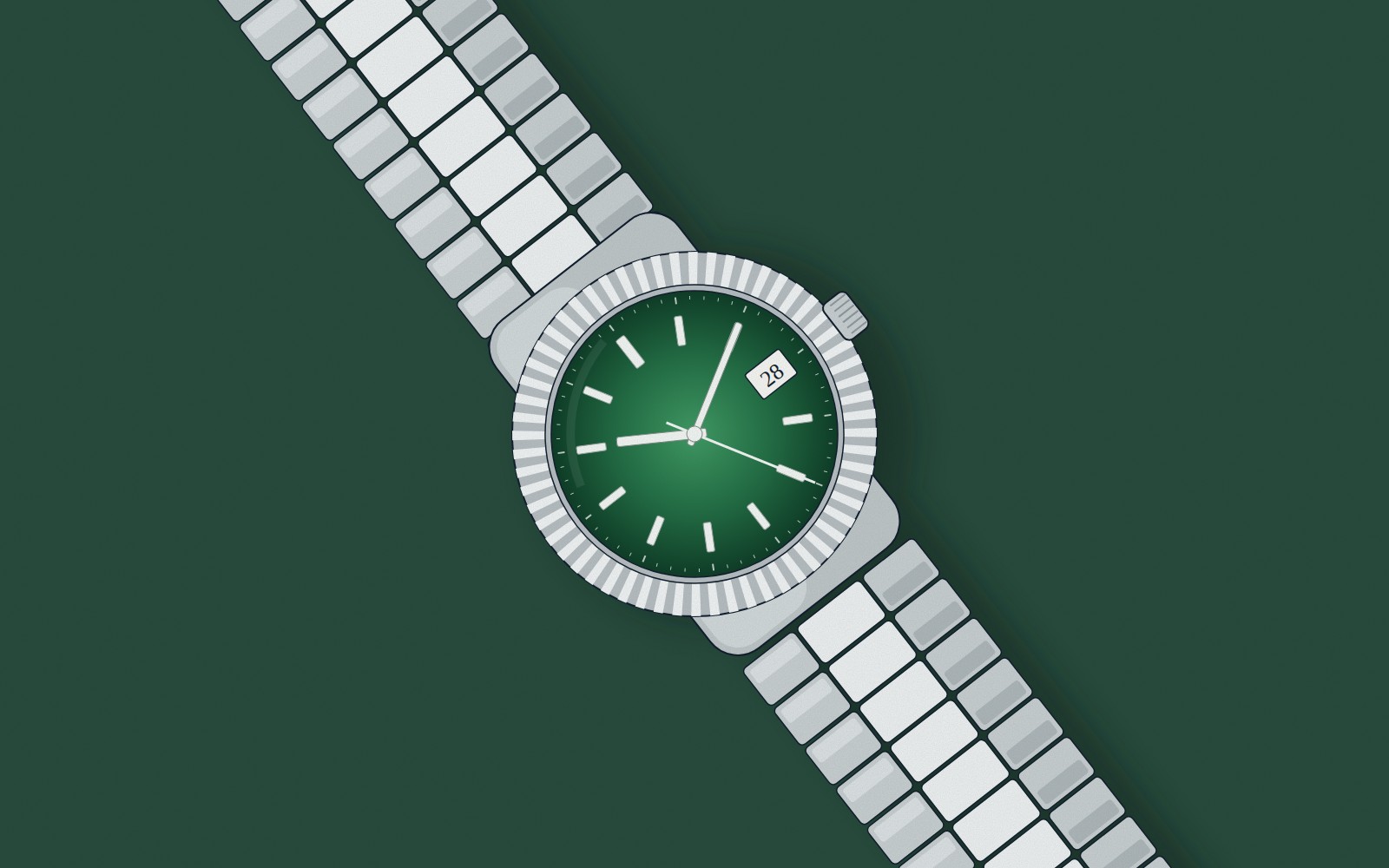
Walk into most luxury stores with enough money and the transaction is supposed to be simple. You choose the bag. You choose the shoes. You choose the jewellery. You pay. You leave. Luxury, in its most traditional form, is a very polished version of yes. Yes, of course. Yes, we have it for you. Yes, right this way.
Rolex is more interesting. Because with Rolex, especially at the most desired end of the catalogue, the experience that shapes the brand is often not yes. It is: Not now. We’ll let you know. There is demand. It’s difficult. It’s allocated. And that turns out to be one of the smartest things about the entire business.
Rolex works because it made access part of the product.
A luxury brand usually wants to sell you the thing
That sounds obvious, but it matters. In most businesses, desire and availability are supposed to meet as efficiently as possible. Marketing creates interest, distribution satisfies it, and the company collects the revenue. The cleanest business model is simple: make people want the product, then make the product easy to buy. Rolex does not entirely play that game.
Of course it wants to sell watches. Of course it operates on a huge scale. Of course it is not some tiny artisan workshop making twelve pieces a year. But culturally, one of the most powerful things Rolex has achieved is creating a world in which having the money does not necessarily mean having the watch.
That is a very unusual position. Especially in luxury. Because luxury is normally about proving that you can afford something. Rolex adds another layer: Can you actually get it?
Money is not enough
That is the core psychological twist. A high price alone already filters customers. It says: this is not for everyone. But if price is the only filter, then the signal is fairly straightforward. Ownership tells the world you had the money. Rolex complicates that. With the most in-demand models, ownership can suggest something else too: patience, access, relationships, timing, luck, knowledge, persistence, perhaps some combination of all of them.
That makes the object more socially powerful. A luxury product becomes more desirable when buying it feels less like an ordinary transaction and more like entering a system. You are not simply purchasing a watch. You are navigating a structure. And once a product exists inside that structure, it starts to acquire a kind of energy that ordinary consumer goods rarely have.
People do not only ask: How much does it cost? They ask: How did you get it? That question is everything.
Rolex sells the watch. The market sells the mythology.
One of the most fascinating things about Rolex is that so much of its power comes not just from what the company says about itself, but from what the world says around it. The brand exists not only in advertising campaigns, tennis sponsorships or glossy displays. It exists in: waiting lists, dealer lore, stories of “purchase history”, forums debating availability, secondary-market prices, YouTube videos on “how to get the call”, whispers about allocations, and endless speculation over which models remain hardest to obtain.
In other words, Rolex benefits from a gigantic cloud of conversation that most brands can only dream of. And much of that conversation is driven by one central fact: people want certain Rolex watches more quickly than those watches become available to them. That tension does something extraordinary. It turns distribution into drama.
The purchase becomes a story
Buying a product is usually boring. You choose it online. You pay. A box arrives. Rolex, by contrast, has managed to keep the purchase emotionally charged. People remember where they bought one. Who called them. How long they waited. Which model they were hoping for. Whether they got “the call.” Whether it was their first one.
That sounds trivial, but it is not. Because stories create attachment. And attachment creates value beyond utility. Most companies focus all their attention on the product itself: its design, its quality, its features. Rolex does that too, of course. But the brand’s strange genius is that the emotional charge often begins before the watch is even on the wrist.
The anticipation is part of the experience. The uncertainty is part of the experience. The delay is part of the experience. Even the frustration, in a strange way, is part of the experience. That is incredibly hard to engineer. Rolex, whether intentionally or structurally, has ended up benefiting from it enormously.
It transforms the meaning of ownership
There are many expensive watches in the world. There are watches more technically complicated than Rolex. Watches made in smaller quantities. Watches finished more obsessively by hand. Watches that watch collectors might privately consider more sophisticated. And yet Rolex remains the reference point. Why? Because it has done something larger than making good watches. It has made ownership legible.
A Rolex is not just recognised by watch enthusiasts. It is recognised by almost everyone. That matters. Luxury becomes especially powerful when it can be read instantly. But Rolex goes one step further: it is not only recognisable, it is recognisable as something difficult enough to matter. That combination is gold. A product people instantly identify and instinctively understand as significant.
The watch on the wrist does not merely say: this is expensive. It can also suggest: this was worth obtaining.
Scarcity is powerful, but controlled access is more powerful
There is a subtle but important difference between the two. Plenty of brands are scarce simply because they are small, obscure or badly distributed. That alone does not create desire. Rolex is different because scarcity appears in a context of enormous cultural visibility. Everybody knows the brand. Everybody recognises the crown. Everybody understands that Rolex is important.
And then, on top of that widespread recognition, not every model is straightforward to buy. That is the magic formula. Because if a product is hard to get but nobody cares about it, scarcity means nothing. If a product is desired by everyone but instantly available, desire can flatten into routine. Rolex sits in the more interesting middle ground: maximum recognition, imperfect access.
That gap is where the heat comes from.
The dealer becomes part of the theatre
Another reason Rolex is so compelling is that the brand experience does not happen entirely on Rolex’s own terms. It passes through authorised retailers. This creates a strange and unusually human layer inside a luxury business. The boutique or dealer is not merely a checkout point. It can feel like a gatekeeper. You are not only choosing the watch. You are being observed choosing the watch.
Are you a first-time buyer? A collector? A tourist? A regular? Someone “serious”? Someone who understands the brand? Someone who might disappear and resell it? That social ambiguity gives the purchase a strange charge. The transaction can feel slightly ceremonial, slightly political, slightly opaque. And opacity, when attached to something already desirable, often increases fascination.
People become obsessed with systems they do not fully understand. Rolex lives very comfortably inside that dynamic.
The secondary market makes the primary market stronger
This is one of the most interesting loops in the whole story. Normally, brands dislike losing control of pricing, distribution and perception to resale markets. But in Rolex’s case, the existence of a feverish secondary market has historically reinforced the brand’s importance. Why? Because it publicly reveals desire. If people are willing to pay above retail to own something immediately, the object begins to signal more than craftsmanship or design. It signals urgency.
It signals that time itself has value. And once time has value, waiting becomes meaningful. This is crucial. Rolex is not just selling steel, gold and mechanics. It is selling a product for which immediacy can be worth a premium. That alone tells the world that the watch occupies a very different category from ordinary luxury goods.
A handbag may be expensive. A watch may be expensive. But a Rolex can become something stranger: expensive at retail, and still not enough. That is a remarkable position.
Rolex benefits from not explaining everything too much
Many modern brands are obsessed with transparency. They want to explain every detail, every process, every intention. They issue endless content, endless community messaging, endless reassurance. Rolex has long seemed more comfortable with silence. It is polished, formal, self-contained and relatively restrained. That restraint helps. Mystery is a luxury asset. When a brand says less, the market says more.
And the less the system feels totally exposed, the more room there is for interpretation, speculation and mythmaking. In some industries, that would be dangerous. In luxury, it can be ideal. Because luxury is not only about information. It is also about aura. Rolex has protected its aura extraordinarily well.
The watch itself helps, of course
None of this would work if the product were weak. A strategy built around access only works if the object at the centre feels enduring enough to justify the theatre around it.
Rolex watches are famously consistent in design language. The Submariner still looks unmistakably like a Submariner. The Datejust remains the Datejust. The Day-Date still carries the same quiet authority. The GMT-Master II still projects travel, utility and status in one gesture. This is another major reason the system works. Rolex does not chase novelty too aggressively.
It evolves rather than reinvents. That gives the watches a sense of permanence. And permanence makes desire more stable. You are not chasing something that might feel dated next year. You are entering a lineage. That makes waiting feel less irrational. If fashion is constantly changing, delay is painful. If the object is culturally durable, delay can almost enhance its gravity.
Rolex is selling certainty in an age of churn
There is also a deeper reason Rolex continues to matter. The modern consumer world is flooded with options, drops, collaborations and trend cycles. Everything refreshes constantly. Everyone is launching something. Luxury increasingly performs youth, novelty and online relevance. Rolex feels different. It projects stability. The watches do not scream for attention in the same way as many fashion objects. The brand does not seem desperate to be current. It does not need to perform trendiness every season.
That restraint creates trust. When people buy Rolex, they are often buying something psychologically larger than a watch. They are buying: continuity, recognition, resale confidence, cultural permanence, and the comfort of choosing something whose meaning is already established. That is very powerful. Especially in uncertain times.
The strangest part: difficulty increases reassurance
Normally, friction is bad business. If a company makes something difficult to buy, we assume customers will leave. Rolex shows that in the right context, friction can actually reassure the customer. Why? Because difficulty implies demand. Demand implies relevance. Relevance implies value. And value, once broadly agreed upon, begins to justify both the price and the patience.
This is what makes Rolex so fascinating from a strategy point of view. The thing that should weaken the customer experience (not being able to get exactly what you want exactly when you want it) can actually strengthen the brand. That is profoundly counter-intuitive. And that is exactly why it belongs in Why It Works.
The real product is not only the object. It is the feeling of admission.
This may be the cleanest way to say it. Rolex does not just sell a watch. It sells the feeling that obtaining the watch meant something.
That you entered the room. That you got access. That you were chosen, or at least permitted. That the object had to be waited for. That it was not just picked off a shelf like any other product. The watch becomes proof not merely of spending, but of passage. That emotional upgrade is huge. It is the difference between: I bought this
and I got this. The second is a much stronger sentence.
What founders can steal from Rolex
Not “make people wait for no reason.” That is the lazy lesson, and it would fail in most businesses. Rolex works because the waiting, uncertainty and restricted access sit on top of something already culturally powerful: iconic design, long-term trust, a highly legible symbol and sustained demand. The real lesson is more strategic: Do not only think about the value of the product. Think about the value of access to the product.
Sometimes a business gets stronger when it stops treating access as invisible logistics and starts recognising that access itself shapes desire. Who gets it? How easily? How immediately? Under what conditions? With what story attached? For most brands, convenience is the hero. Rolex shows that for the right product, selective inconvenience can become part of the allure.
That is a dangerous idea, but a brilliant one.
Luxury usually says “yes.” Rolex became more powerful by saying “maybe.”
That, ultimately, is why it works. The company did not build one of the world’s most famous luxury brands simply by charging high prices. It built a system in which the object retained its mystique even after becoming globally recognised. That is rare. Most brands lose their aura when they become too visible. Rolex somehow did the opposite.
The crown became universal. The watch became iconic. And access remained just uncertain enough to keep desire alive. You are not only buying a beautifully made object. You are buying entry into a story that begins before the purchase and continues long after. A story about time, yes. But also about waiting. And perhaps that is the most Rolex thing imaginable.
The brand that makes watches understood that anticipation could be one of its most valuable materials.
Why It Works
Rolex made access part of the luxury.
The watch is desirable not only because it is expensive or well made, but because owning one can feel like obtaining something, not merely purchasing it.
Rolex doesn’t just sell timepieces. It sells the feeling that time, and patience, were required to reach them.